Episode 144: Adela Gargollo Freer
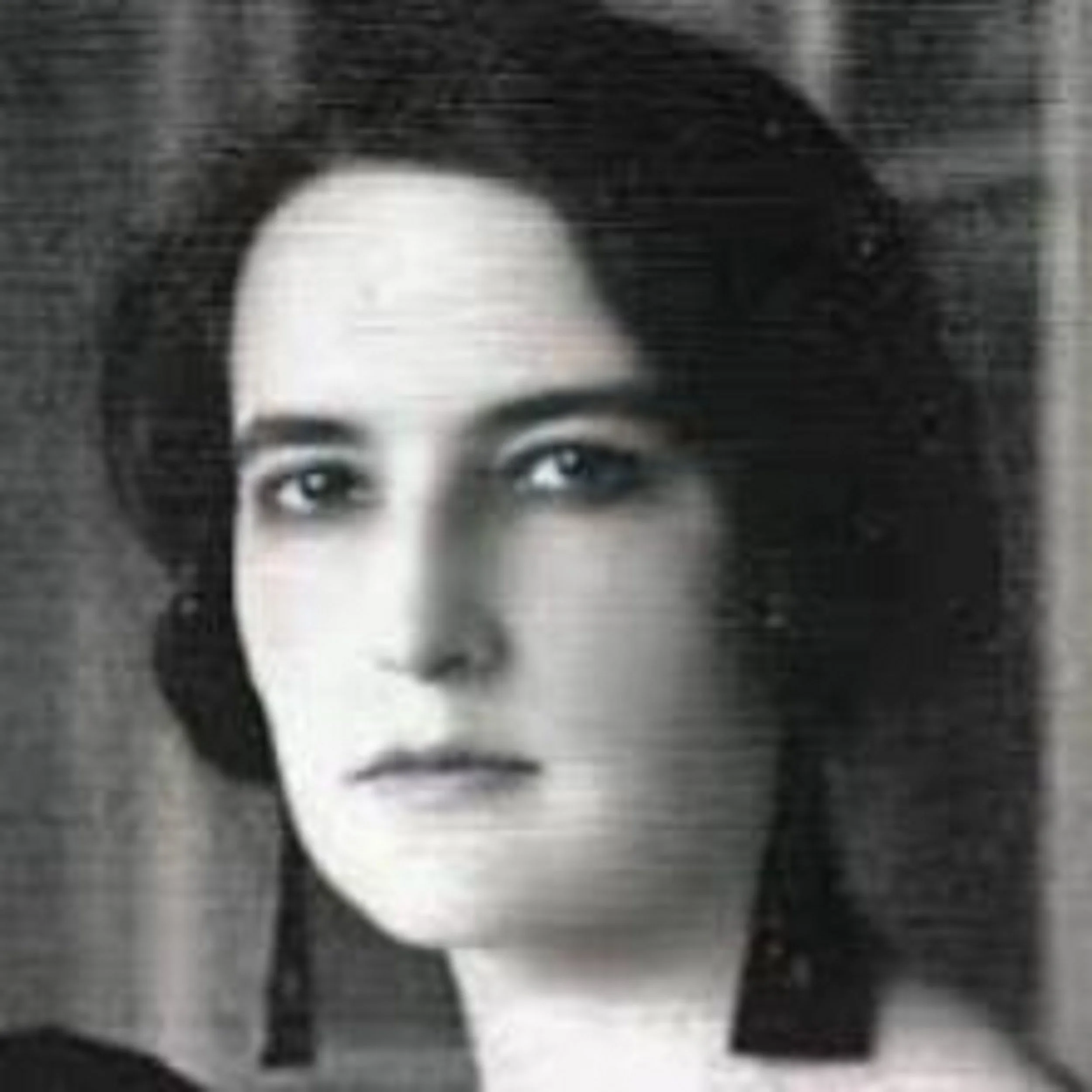
Adela Gargollo Freer, also known as María Adela Eulalia Gargollo Freer, was born on February 10, 1866, in Costa Rica. She came from a large and notable family and married General Lesmes Jiménez Bonnefil in the late 1880s. Together, they raised eight children. In 1906–1907, Adela and Lesmes founded La Factoría de Mosaico, the first factory in Costa Rica producing mosaic bricks and cement-based products.
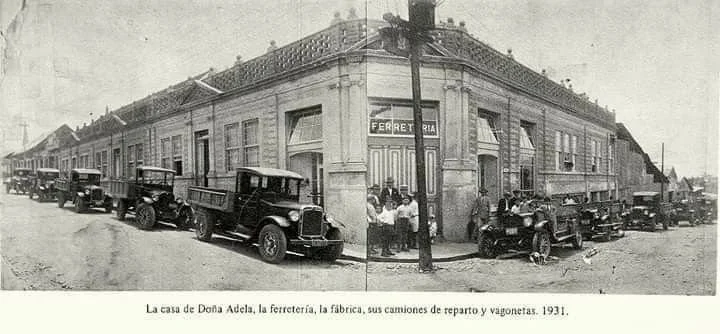
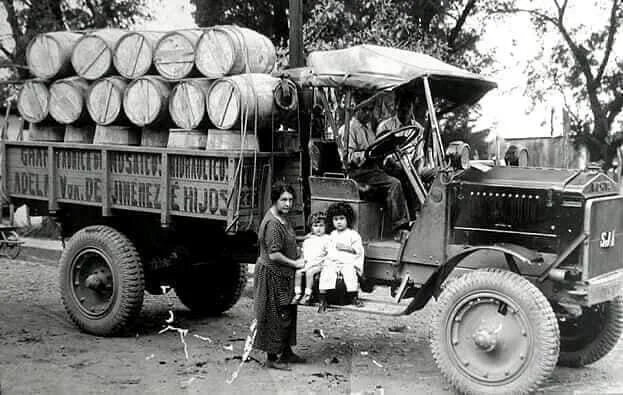
Tragedy struck shortly after when Lesmes died, leaving Adela widowed with children and a newly founded company burdened by debt. Adela assumed full leadership of the business, becoming its general manager. She was very hands-on, overseeing employee training, managing production, handling contracts, suppliers, and clients, and even performing physical labor at the factory. Under her leadership, the company was renamed Adela V. de Jiménez e Hijos and not only recovered but expanded into full-scale construction, becoming Costa Rica’s leading construction firm for over forty years.
Adela led or contributed to numerous significant religious and civic projects, including churches, paved roads in San José and Heredia, the Cabo Blanco Lighthouse, theaters, and the original National Stadium completed in 1924. Her influence extended beyond construction: she invested in aviation to improve regional mail delivery, founded a theater to promote culture, co-founded Costa Rica’s Fight Against Cancer organization, and hosted political gatherings at her home.
Known nationally as the “Queen of Labor,” Adela earned widespread respect and international recognition, including a Gold Medal at an international construction fair in Italy in 1926. She died on September 21, 1947, in San José, leaving a lasting legacy as a pioneering woman in construction and civic life
Caryatid: Viviana Yock
Viviana Yock is a Costa Rican architect and entrepreneur recognized for her versatility and leadership in the design and construction field. She earned her architectural degree from the Instituto Tecnológico de Costa Rica and is deeply involved in every stage of her projects, from design through execution. Viviana owns and manages four businesses: A3Arquitectos, an architecture and interior design firm founded in 2009; Edison, a construction company focused on remodels since 2011; We Furniture Design, which specializes in furniture design and fabrication; and Única Diseño Latam, a jewelry and accessories brand launched in 2023 that highlights work by Latin American designers. Through her multidisciplinary approach and entrepreneurial drive, Viviana exemplifies a modern, hands-on leader whose career offers inspiration and mentorship to others pursuing architecture and construction.
-
This transcript was prepared during the development of the episode.
Final recorded episode may deviate slightly from the content presented below as changes, edits, or improvements may be made during the recording and editing process.
Norgerie: Hi! Welcome to season 14 of She Builds Podcast, where we share stories about women in the design and construction field, one lady at a time.
Jessica: This season's theme is “Anything Goes” a combination of regular episodes and charrettes based on anything inspiring us at the moment.
Norgerie: Quick reminder, we are not experts on history, we are just sharing stories about the information that we find, as friends having a fun conversation.
Jessica: If you find an error, send us an email and we will all continue learning.
Norgerie: Today we're learning about Adela Gargollo Freer, the owner of a Construction Company in Costa Rica. I’m Norgerie Rivas, feeling excited.
Jessica: Hi, I’m Jessica Rogers, in Miami, FL
Norgerie: Let's begin. The time was February 10, 1866 the place, possibly Costa Rica, Adela Gargollo Freer was born!
Jessica: ooh we are going wayyy back - vamos a Costa Rica!
Norgerie: One source mentioned she was Francisco Morazán's granddaughter, and I went way down a rabbit hole looking up who that was.
Jessica: oh what did you find?
Norgerie: Francisco was a military general who became a liberal Central American politician and who served as the Head of State of Honduras and later as President of the Federal Republic of Central America from 1830 to 1839.
Jessica: The what? Was there a Federal Republic of Central America?
Norgerie: Yep after Mexico and most of Central America gained independence from Spain in 1821, the Central American countries were annexed by Mexico and they were part of that for two years then in 1823, Nicaragua, Costa Rica, Honduras, El Salvador and Guatemala decided to band together and create their own Federal Government, modeled after the US. They were meant to have their own governments like the states do over here but then also a Central government.
Jessica: Oh then what happened? Why don't they have that today?
Norgerie: Well much like today there was a lot of drama between liberals and conservatives. The first president of the Federal Republic of Central America was Manuel José Arce. Who started out liberal but turned conservative. His strongest voice of opposition was grandpa Francisco Morazán.
Jessica: Oh he's back in the story!
Norgerie: Yes, he was like dude the people elected a liberal President and you flipped flopped not cool man, not cool.
Jessica: hmmm 1800’s sounds like it's happening in 2026
Norgerie: Yeah, so from the beginning there was a lot going on, the Republic broke out into civil war, with Liberals led by Francisco and they won. That's how Francisco became president in 1830. During which time he did a lot of things that seem good in my book. He fought for freedom of speech, religion and press and pushed for separation of Church and State by making marriage secular and getting rid of Government tithing.
Jessica: this all sounds lovely
Norgerie: Is that how that word is pronounced? Tithing?
Jessica: your guess is as good as mine. TIE- THEENG
Norgerie: We need Lizi to correct our pronunciation as necessary.
Jessica: Baby come back
Norgerie: Ooooo. Ok back to our Cliffnotes on the Republic of Central America.
Jessica: yes!
Norgerie: For better or for worse depending on who you ask, the Republic was never quite able to get itself organized enough to thrive. They had a hard time collecting taxes for the central government, the conservative and the liberals never got along. And they fell into a second civil war which brought an end to Francisco's 10 year presidency and to the Republic itself. All the countries decided to break off and do their own thing, chicken wing once and for all.
Jessica: what a roller coaster.
Norgerie: Eventually, Francisco ended up in Costa Rica, where he was executed.
Jessica: oh man
Norgerie: There's a long story behind that, but we gotta circle this story back to Adela.
Jessica: oh yes!
Norgerie: Let's pretend I didn't say he was executed. In fact let's rewind, Francisco is in Costa Rica.
Jessica: okay he is alive and well in Costa Rica
Norgerie: Francisco, though married to the wealthy socialite María Francisca Úrsula Josefa Lastiri Lozano, with whom he had one daughter. Yet the dude still found time to mess around, in total he had six kids, one of them adopted. He is thought to have around 600 descendants. Which sounds like a lot but makes sense, I mean the dude started having offspring in 1838 so 200 years later to have 600 descendants is kinda normal as crazy as it sounds.
Jessica: Wow, I thought my family was big. But if his immediate descendants took after him it makes sense that they would just keep multiplying. And I’ve been to Costa Rica - in the mountains - it can get chilly - there isn’t tv. Folks have to find other ways to keep warm and entertained.
Norgerie: Thank you for putting that into perspective Jessica. Francisco made sure to leave a mark in the world, in politics, military, family tree, you name it.
Jessica: you bet!
Norgerie: Good thing is the guy recognized his children outside of marriage. I respect that cause it's not the kid's fault what the parents do, and in those times they would have to grow up like on the margins of society unfairly when that stuff happens.
Jessica: oh yeah that’s a good point. It’s nice that they all got recognized - because that’s usually not the case
Norgerie: So that brings us to Teresa Escalante, a socialite in Costa Rica. She had a romance with Francisco, which resulted in Teresa getting pregnant. And before the fetus was born Francisco was executed.
Jessica: Ahh man - before the baby is a baby - baby dady is gone
Norgerie: Dude can't recognize his baby if he's dead. And honestly it wasn't safe with political drama going down.
Jessica: so what is Teresa gonna do?
Norgerie: She's gonna fall in love and marry an English guy living in Costa Rica, Guillermo Freer. And he adopted Teresa's baby and so Dolores Freer Escalante enters our story.
Jessica: ok so I recognize the last name soooo - I’m assuming, we are getting closer to Adela.
Norgerie: Yes we are. Later in life Dolores learned who her real father was, so she knows her heritage. But they had to keep it hush hush because there was still political bad blood against Francisco Morazán. So she kept it on the downlow. Kept her Freer name.
Jessica:s sounds like the safe thing to do
Norgerie: In 1859 Dolores, aka, Lola married the Spanish citizen Luis Vicente José Gargollo. And together these two had nine kiddos. Elena Rosa de las Mercedes, Eduviges Teresa, María Luisa, María Adela Eulalia, Luciano Luis José María, Guillermo Juan de Jesús, Ricardo María de los Dolores, Manuel Antonio Francisco and José Aurelio de los Dolores.
Jessica: OMG that was a lot of kids and a lot of names, but did I hear our girl Adela in there? I think I did.
Norgerie: You sure did her full name was María Adela Eulalia Gargollo Freer. But people know her as Adela, or Adelita, or Itilla.
Jessica: Cute only XX minutes in and we have little Adelita
Norgerie: I gave you that long family history, not only cause I found it super interesting but because that's all the back story I have for you. I did not find any information about Adela's childhood or education. I just know she was born February 10, 1866 and when she was 20, barely entering adulthood, On July 5th, 1906 she married General Lesmes Jiménez Bonnefil.
Jessica: you know what? I will take it. What we can gather is that she grew up in a large family.
Norgerie: She sure did, I found a lot of info on Lesmes. But I've digressed enough today. So I'll just say dude came from wealthy parents, they gave him a very good education, he was one of the first if not the first Costa Rican civil engineer/ architect. He got his degree in Belgium. He moved back to Costa Rica and became director of Public Works. Got called to military conflicts twice. Once with Honduras and another time with Nicaragua. Survived both events. Married Adela in 1886. Went on to have a prolific career as an architect. Designed many buildings and churches. And then in 1906 or 1907, depending on the resource, Lesmes and Adela, along with José María Castillo, a Colombian business man, opened La Factoría de Mosaico, a small factory producing mosaic bricks and cement-based products. The first of its kind in Costa Rica.
Jessica: Cute! So we got a couple partnership too?
Norgerie: We do, and they not only gave life to a company together, they also made 9 humans together!
Jessica: Super cute - and you see? That’s how you have 600 descendants - this family tree is more like the Amazon rainforest
Norgerie: Hahaha, well one of the children sadly passed away the year they were born so she raised 8 children. their first child was a daughter, born in 1888, Maria de la Trinidad Jimenez Gargollo. Their youngest was Oscar Santiago Martin de Jesus Jimenez Gargollo, born 1901.
Jessica: What’s up with the long names in this episode! You’re enjoying saying them aren’t you.
Norgerie: I do, I think if your parents name you something you should be called that, names shouldn’t be for decoration.
Jessica: Yeah but maybe when you have more than 5 or 6 names some of those in there are for decoration.
Norgerie: Yeah maybe, but they shouldn’t be. Unfortunately, tragedy would strike in 1906 or 1907, depending on the resource, when her husband died. At this time Adela had it really rough. Raising kids now without a dad, and a company that was in major debt. I mean they had JUST started the company and the dude passes away!!! Just terrible.
Jessica: Oh man , that is tough. So many kids to take care of and a company on top of all of that. Plus the company isn’t doing so well and you know, dealing with grief through it all.
Norgerie: Well when the going gets tough the tough get going. She not only became the General Manager of the company, on her own! She jumped in wherever needed. She oversaw the factory’s employee training. She got involved in production, she was not above watering the concrete blocks and counting the barrels of cement. She dealt with contracts, suppliers, clients, projects and everything in between. She was doing all the things.
Jessica: She was a true leader.
Norgerie: And the company thrived! They got out of debt and grew! They grew into a lot more than producing mosaic bricks. They were into full on building construction. For more than forty years it was Costa Rica's leading construction firm. Can you imagine?
Jessica: OMG - that’s amazing longevity in a company is such a great thing to see. It’s awesome to know that Adela was behind it - especially considering where the company was before that.
Norgerie: With the expansion came a rebranding. The company became “Adela V. de Jiménez e Hijos.” In English that is Adela Widow of Jiménez and Children.
Jessica: That’s right! We love, we love
Norgerie: Let's talk about notable projects! But before then let's pause to hear a bit from our sponsors.
Norgerie: And we’re back, OK, let’s talk projects! While she had a varied portfolio I'm going to focus on Religious and Civic projects because these are the most documented.
Jessica: Let’s do it
Norgerie: In the Religious sector we got the Church of La Merced. One of the sources mentioned this one was designed by her husband. And the Basilica of Santo Domingo de Guzman in Heredia which underwent a renovation in 2021. Both of these still stand and I should be placing pictures on the show notes.
Jessica: excited to see those and would love to do another archventure to see them IRL
Norgerie: Then on the Civic side we can thank her for pavement on San José’s main streets and building one of the first paved roads to Heredia which is a city near San José. It's actually the old capital, today San José is the capital.
Jessica: ooo very cool
Norgerie: We also have Cabo Blanco Lighthouse on the Nicoya Peninsula.
Jessica: ooo fun fact Cabo Blanco was the first area in Costa Rica to be declared a National Nature Reserve. No tourism was allowed in the Cabo Blanco Absolute Reserve from the 1960s through the late 1980s, due to deforestation the reserve suffered before it was declared protected. To this day, much of the park remains accessible only to scientists, state workers, or those with special clearance. Though in some parts we're allowed to go hiking, swimming, and wildlife watching, so we should also add this to our Archventures.
Norgerie: Let's do it. Let's also add the Capitolio Theater and the Adela Theater. The Capitolio Theater or Cine Capitolio was built in 1930 and it actually started out as a market, but it went bankrupt and the new owner turned it into a movie theater in 1937. Sadly it was demolished in 1986 and today the land where it once stood is part of the Hospital Bíblico, the Biblical Hospital.
Jessica: ugh sad to see it go - but happy they are using the land for something useful?
Norgerie: The last but not least important project of hers I'll mention today is the original Estadio Nacional, National Stadium in La Sabana. This was a very important project for many reasons, politically it was where the transfer of presidential power took place until 2006. In the sports world, it was the location the National football or soccer league played. And the National league or la Sele as my Costaricans say is a great source of National pride.
Soccer is a big deal in Costa Rica.
And on a cultural note, many concerts and gatherings were held there. The stadium hosted Pope John II, Pavarotti, and Aerosmith.
Jessica: ooh so aside from eco tourism - this stadium played a key role for tourists and the locals. an icon for the city. That’s pretty cool
Norgerie: The stadium was completed on December 29, 1924. Throughout the years it went through two major renovations and expansions. And then in 2008 and it was demolished to build a brand new one which is what we would see if we go to the site today. That one was built by a Chinese company, not Adela's.
Jessica: OMG roller coaster of emotions
Norgerie: Due to her tireless work and dedication, Adela became known among Costa Ricans as the “Queen of Labor.” Can you imagine a woman in the 1920s in the Construction field to be called the Queen of Labor. I think that speaks to the level of admiration and respect people had for her.
Jessica:And this was a testament to her work ethic. Folks saw this and recognized it, and on top of all of this … 8 kids
Norgerie: In 1926 she was invited to attend an International Construction Fair in Italy. There she was awarded the Gold Medal in honor of all her achievements throughout her career. One of my research materials mentioned that people back home felt this award was not only for her but for Costa Rica, they felt such National pride for her and with her.
Jessica: THAT’S RIGHT - as they should
Norgerie: Believe or not Adela had endeavors outside of her construction company.
Jessica: oh you know little hobbies in case she was bored
Norgerie: She bought a plane and hired pilots to deliver mail within Central America because she wanted to enhance communication between these countries. And she also built a Theater, the Adela Theater, offering recreational performances to theater enthusiasts. I believe it was free to the public but I'm not sure.
Jessica: umm that’s awesome ( I’m going to need to find another word) I love how she wanted to help with communication and I love the theater idea. bringing culture to the masses
Norgerie: Can you imagine this lady with all her grit, determination, go-getter attitude being an activist?
Jessica: it’s literally in her lineage hahaha
Norgerie: She co-founded a group named Lucha contra el cáncer, the Fight Against Cancer in the country.
Jessica: ugh lovely -
Norgerie: Throughout her lifetime she grew to have so much influence even politicians came to her. She frequently hosted gatherings at her home to discuss political futures such as who would be presidential candidates, political platforms as they affected economics and culture, you know normal topics.
Jessica: this woman was shakin and bakin and doing all of the things
Norgerie: I searched but couldn't find if she supported a particular party. But her politics ran in her blood.
Jessica: oh yeah for sure - the lineage is strong and ever present
Norgerie: She passed away on September 21, 1947 in San José, Costa Rica.
Jessica: we all know that the parameter of our show is to only tell the stories of women that have passed away - but everytime - it’s still a little sad. You just want them to live forever because of their impact, their passion, and their influence.
Norgerie: The writer Marco Retana, in a report published in the newspaper La República on March 20, 1981, stated:
“That man has gone on leaving his mark is not abnormal, but obligatory. That a woman, in a world of prejudice, in a society that still believes in gynaeceums, dares to break the molds—and breaks them—and fights and leaves a mark difficult for any man to surpass, is worthy of respect, emulation, and above all, admiration.”
Jessica: and that’s our Adelita.
Norgerie: Alright, now we have reached the second part of our episode, the Caryatid. A caryatid is a stone carving of a woman, used as a column or a pillar to support the structure of a Greek or Greek-style building. In each episode we choose a “caryatid” -- a woman who is working today, furthering the profession through their work, and who ties into the historical woman of our episode.
Norgerie: Drum roll please… Viviana Yock!
Jessica: (applause) Yeay!
Norgerie: Viviana is a listener suggestion, thank you Yuliana R for bringing to our attention this superstar we're about to share right now.
Jessica: ooh you know how we love a listener suggestion. Also shout out to Yuliana - friend to the show - thank you for the suggestion!
Norgerie: Just like Adela, Viviana is a Costa Rican entrepreneur, and just like Adela she can't do just one thing. She owns and runs four companies. Jessica, please help me count.
Jessica: OMG four companies? ok gimme one
Norgerie: An architecture and interior design firm, A3Arquitectos since 2009.
Jessica: Okay - that’s one
Norgerie: A construction firm specializing in remodels, Edison, since 2011
Jessica: that’s two
Norgerie: furniture design and fabrication company, We Furniture Design.
Jessica: ok that’s three
Norgerie: a jewelry and accessories shop, where all pieces are curated and designed by Latin American designers Única Diseño Latam, since 2023.
Jessica: and that’s four and also that it is really cool
Norgerie: Viviana is an architect by education, her Alma Mater is Instituto Tecnológico de Costa Rica. She's very hands on, being involved in all aspects of project delivery, and she strives to be a well rounded leader.
Jessica: sound like Adela
Norgerie: I think just like Adela, Viviana's work trajectory can serve as great mentorship to anyone interested in the construction field.
Jessica: here here
Norgerie: Before we say goodbye we want to say thank you to CMYK for the music, John W our technical advisor. And most of all thank you for listening!
Lizi: Remember to check out our show notes for links to all of our resources on this episode as well as pictures of projects we’ve talked about.
Norgerie: We hope you enjoyed learning about today’s lady and caryatid along with our banter, and that you are inspired to find out more about them and other amazing professional ladies. Again, thank you.
Jessica: Please let us know what you thought of our episode. If you’ve enjoyed it please help us spread the word. Tell your friends and give us 5 stars on Itunes and Spotify, and write us a review, this will all help us reach a wider audience and for more people to learn about these amazing ladies with us.
Norgerie: Your support means everything to us. If you’ve enjoyed our content and want other ways to help us with our mission, you can support us by visiting our website for merchandise.
Jessica: If you don’t need any more swag, but you’d still like to consider supporting the research we’re doing, you can donate to us on our website shebuildspodcast.com/donate or you can buy us a coffee at buymeacoffee.com/shebuildspodcast. You can also find links to all of these items on our website.
Lizi: She Builds Podcast is a member of the Gābl Media podcast network. Gābl Media is curated thought leadership for an audience dedicated to building a better world. Listen and subscribe to all the shows at gablmedia.com. That’s G A B L media.com.
Norgerie: We are excited to hear from you and for you to come back and keep learning about bosses with us. You can email us your thoughts at shebuildspodcast@gmail.com, leave a comment on our website shebuildspodcast.com, or follow us on instagram and facebook @shebuildspodcast, and on X @shebuildspod. See ya!
References
Arias, Gustavo. “Adela Gargollo Freer, La Reina Del Trabajo.” Ticas Poderosas, 27 Feb. 2023, ticaspoderosas.com/index.php/adela-gargollo-freer-la-reina-del-trabajo.
Carrasco, Haydi. “Francisco Morazán, Herrera Y El Sabio Valle, ¿Quiénes Son Sus Descendientes?” www.elheraldo.hn, 25 June 2021, www.elheraldo.hn/elheraldoplus/interactivos/francisco-morazan-jose-cecilio-valle-dionisio-herrera-descendientes-BWEH1473013.
Cartin, Maritza. “El Antiguo Estadio Nacional, La Sabana, S.J., 1924-2008.” Mi Costa Rica De Antaño, 14 May 2024, micostaricadeantano.com/2017/06/10/el-antiguo-estadio-nacional.
---. “Teatro Adela, 1924-1990.” Mi Costa Rica De Antaño, 8 Feb. 2024, micostaricadeantano.com/2021/11/17/teatro-adela-1924-1990. Accessed 9 Feb. 2026.
---. “Teatro/Cine Capitolio, San José, 1937.” Mi Costa Rica De Antaño, 14 May 2024, micostaricadeantano.com/2019/01/26/cine-capitolio.
CostaRica.com Editors. “Cabo Blanco Reserve.” Costa Rica, www.costarica.com/attractions/cabo-blanco-reserve.
FamilySearch.org. ancestors.familysearch.org/en/LCBW-1D6/maria-adela-gargollo-freer-1866-1947.
Instituto Nacional de las Mujeres. “Adela-Gargollo-Freer-biografia-de-mujeres.” Instituto Nacional De Las Mujeres, 17 Dec. 2025, www.inamu.go.cr/es/-/contenido-adela-gargollo-freer-biografia-de-mujeres. Accessed 9 Feb. 2026.
Summa, Revista, and Revista Summa. “Mujeres Más Poderosas En Los Negocios 2025: Viviana Yock, Una Líder Que Desafía Los Límites.” Revista Summa, 12 Mar. 2025, revistasumma.com/mujeres-mas-poderosas-en-los-negocios-2025-viviana-yock-una-lider-que-desafia-los-limites.
Valenciano, Marianela Mora and Colegio de Arquitectos de Costa Rica. Arquitectas de Costa Rica: Sus visiones y aportes. 1st ed., Colegio de Arquitectos de Costa Rica, 2024.
Images: Cartin, Maritza. , 8 Feb. 2024, micostaricadeantano.com. Accessed 9 Feb. 2026. https://micostaricadeantano.com/2017/11/09/teatro-adela/
She Builds Podcast is a proud member of the Gābl Media network. Come join us!
Introducing the Gābl Media AEC Community Memberships. An interactive community platform for you, our audience! Ready to Start? JOIN NOW. Already a member? Login, gain instant access to the community, resources, and the most convenient way to get your continuing education credits.
Be sure to check out: https://gablemedia.com/shebuilds