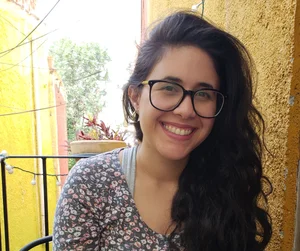
Episode 153: Barbara G Laurie

Barbara G. Laurie played a pivotal role in advancing the visibility, support, and professional development of Black women in architecture through both her leadership and her involvement with Riding the Vortex. Alongside fellow Howard University professor Kathryn Prigmore, she recognized the barriers Black women faced within the profession and sought ways to create meaningful change. At the time, Laurie was conducting research on Black women architects while also pursuing tenure and fellowship within the American Institute of Architects (AIA). Building on a project she had been developing called “200+,” which highlighted the achievements of Black women architects, she collaborated with Prigmore and other colleagues to create a conference session titled Riding the Vortex. The session was selected for presentation at the 2007 AIA National Convention in Washington, D.C.
The concept behind Riding the Vortex was rooted in the idea that architecture can be a turbulent profession, and that Black women must learn to successfully navigate its challenges. What began as a conference presentation quickly evolved into a long-term collective and support network. The group provided a safe space for Black women architects to connect, share experiences, discuss professional and personal challenges, and build relationships with peers and mentors. It also worked to increase visibility for Black women in architecture at a time when their stories were rarely represented in publications or professional forums.
Beyond her contributions to Riding the Vortex, Laurie built an accomplished career as an architect, educator, and leader. A graduate of Howard University, she joined Devrouax & Purnell Architects and later became a partner and managing partner of the firm. She also served as an associate professor at Howard University for twenty years and held leadership roles with AIA DC and other organizations.
Following Laurie’s passing in 2013, her legacy continued through scholarships and student design competitions established in her name. Riding the Vortex also endured, becoming a major catalyst for increasing the number of licensed Black women architects and earning national recognition for its impact on diversity and inclusion within the profession.
Caryatid: Melvalean McLemore & Letters to Miss 1000
Melvalean McLemore is the 16th black woman to become a licensed architect in the state of Texas, co-founder of the NOMA National HBCU Professional Development Program where they connect large firms with HBCU architecture students seeking mentorship and networking opportunities. She has served as President of AIA Houston and on NCARB’s Continuing Education Committee, and won so many awards; AIA Houston 2023 Ben Brewer Young Architect Award and AIA National 2024 Young Architect Award to name a few. She is a contributor of the book and project Letters to Miss 1000.
Letters to Ms. 1000: Words of Wisdom from African American Women Architects is a book and mentoring project that shares the stories and career advice to empower current and future Black women in architecture. The initiative actively works toward the goal of having 1,000 licensed Black women architects in the United States
-
Norgerie: Hi! Welcome to season 15 of She Builds Podcast, where we share stories about women in the design and construction field, one lady at a time.
Jessica: This season's theme is: Collective Impact. Exploring AEC organizations and professionals shaping a more inclusive and innovative built environment.
Lizi: As always, we are not experts, we are just sharing stories about the information that we find, as friends having a fun conversation. If you find an error, send us an email and we will all continue learning.
Norgerie: Today we’re covering a lot of ground. I want to share the stories of a lot of amazing groups and initiatives that have all stemmed from the importance of raising the number of Black Women Licensed in Architecture. Riding the Vortex, 400 Forward, First 500, Letters to Ms 1000 & we’ll learn about the architect Barbara G Laurie.
Jessica: Exciting!
Norgerie: I’m Norgerie Rivas, practicing daily meditations in Houston, Texas.
Jessica: Hi, I’m Jessica Rogers ready for the beach, based out of Miami, FL
Lizi: Hi, I’m Lizi Raar, living my best life, in Chicago, Illinois!
Norgerie: I want to begin this episode by thanking Melvalean McLemore, the 16th black woman to become a licensed architect in the state of Texas, co-founder of the NOMA National HBCU Professional Development Program where they connect large firms with HBCU architecture students seeking mentorship and networking opportunities. She has served as President of AIA Houston and on NCARB’s Continuing Education Committee, and won so many awards; AIA Houston 2023 Ben Brewer Young Architect Award and AIA National 2024 Young Architect Award to name a few. She inspired this episode, thank you Melvalean, for the support you give everyone through everything you do.
Lizi:YAY! Melvalean! She really does it all.
Norgerie: I don’t know if you folks recall episode 8 Beverly Lorraine Greene and Georgia Louise Harris Brown where Jessica shared some almost unbelievable statistics regarding the number of licensed architects in the history of the United States that were African American Women.
Jessica: Oh yeah, I remember, back when we recorded that episode in 2020, there had been 478 licensed African American women total throughout US history.
Lizi: How could we forget?
Norgerie: Fast forward to six years later and thankfully that number has grown and a lot of that is thanks to various efforts of the groups we’re discussing today. Let’s start with Riding the Vortex. First let's meet Kathryn Prigmore and Barbara Laurie, two professors of Architecture at Howard University. They had been thinking about the barriers black women in architecture face and what they could do about it. At the same time, Barbara was researching the work of black women architects, working on getting tenure at Howard University, and working to submit her nomination to become a fellow of the AIA. You know, just keeping busy.
Jessica: two women doing great things - love to see it
Lizi: Casually doing a few things. Also what year is this Norgerie?
Norgerie: Well all these things were probably happening over the years so lets say we’re in the 2000s. And you know to do both these things, get tenure and to become a fellow, you need to prove you're an accomplished person. Tenured faculty have to show their work has broad reach, beyond the classroom. You gotta be published and whatnot. And for fellowship, you should prove you have national recognition.
Jessica: Yeah, applying for Fellowship is a long process that involves getting a sponsor, a letter of recommendation, and then documenting your whole life’s work for a certain amount of time. Proving to the institute that your work quote was ”a pebble that sent ripples in the industry”, summarizing, but you get the gist.
Norgerie: So Barbara was discussing these things with Kathryn too and together they thought of an idea to develop a program Barbara had been working on called 200+, shining a light on the names and work of Black women architects and how that could propel others in the profession. And Kathryn was like lets develop this into a session and apply for the next AIA National Conference! And Barbara I’m sure was like Heck Yeah!
Lizi: Yeah she was!
Norgerie: This idea took shape and they also invited Kathy Dixon, owner of K Dixon Architecture in Maryland and Katherine Williams editor of the Black Women in Architecture Network and Arch Stories websites to apply for the session with them. They named it “Riding the Vortex” and were selected to present at the 2007 AIA National Convention in DC.
Jessica: yeahhh - Kathy and Katherine are also two women that you would want to know. I am surprised we didn’t have them as Caryatids before.
Lizi: Amazing! Norgerie, do you know the meaning behind the name they chose?
Norgerie: The Vortex represents our turbulent profession and Riding represents navigating it successfully. The point of the session was to create a space where black women in architecture could connect and discuss their experiences in the profession.
Lizi: I love that. Such a tangible metaphor for their experiences.
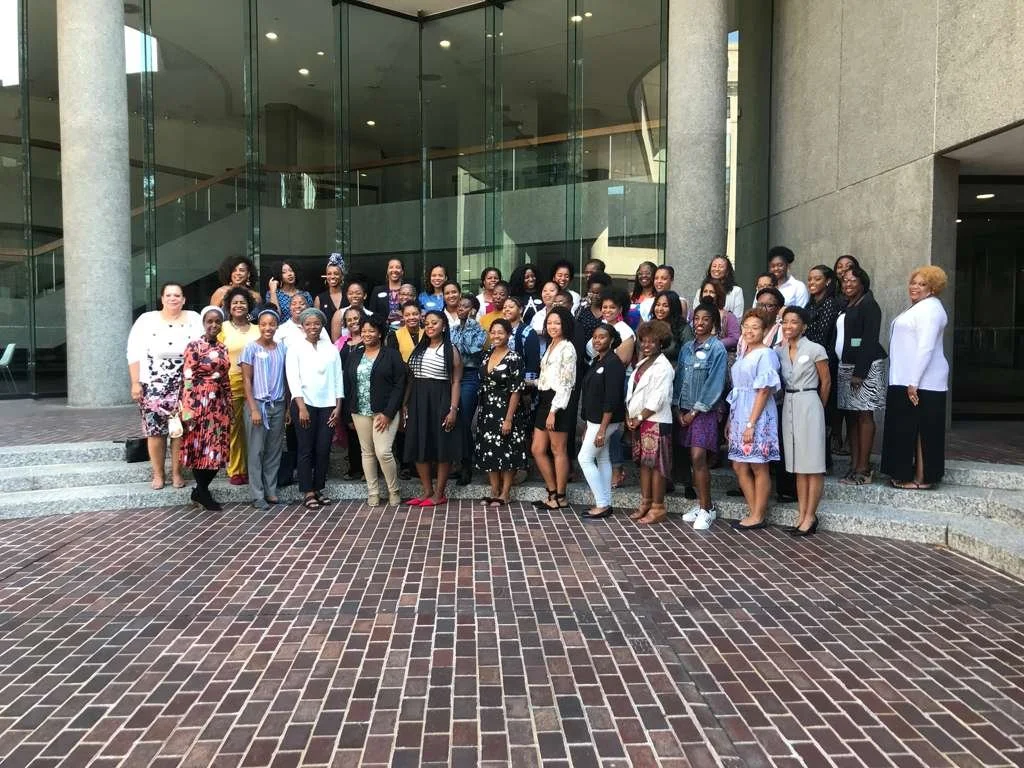
Jessica: That’s why this sounds familiar. When I lived in Virginia, I remember attending the Black Women in Architecture brunch. Katherine Williams organizes the brunch, and I think the one I attended had a lot of these ladies there. I think the premise of the brunch was similar to Riding the Vortex.
Norgerie: You did what!?!?!?! That's so cool, I feel like your part of history. According to the book I was reading the first Women in Architecture Brunch happend in 1984. At that time the number of Licenced Black Women was 20. So you would have attended in the 2000s! Do you remember anything else notable about it?
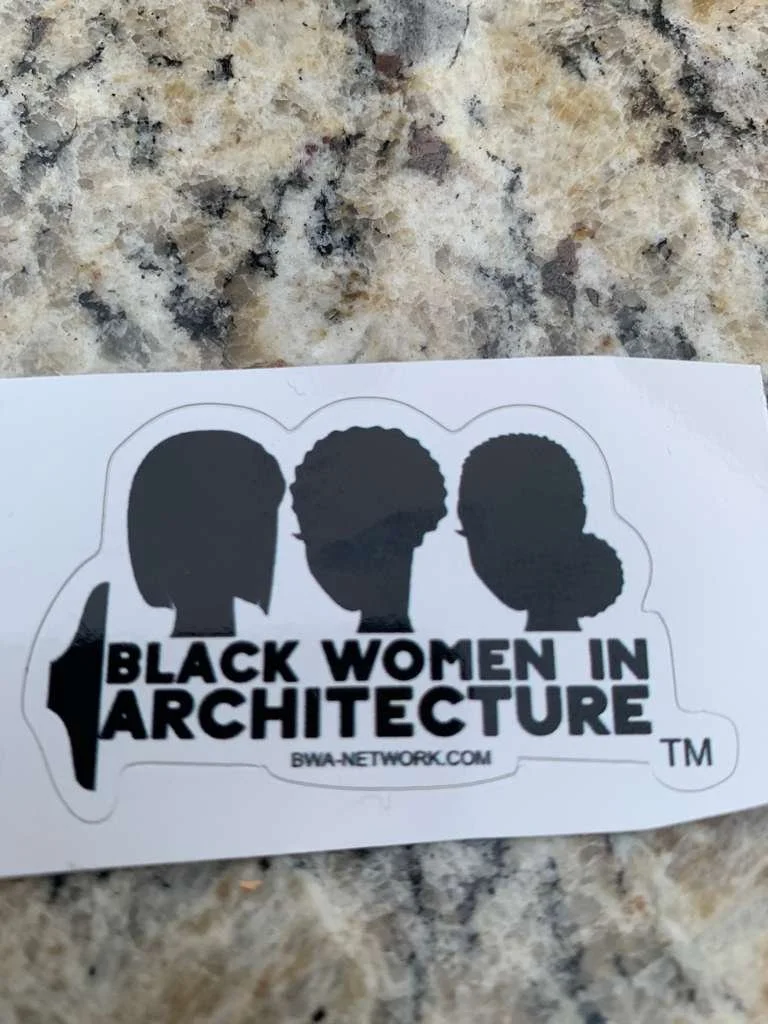
Jessica: this was like in 2019 . It was held at the Octagon at the AIA’s Global Campus HQ. They had a great shrimp and grits situation - but for the event itself - besides COVID happening the following year, I think that had to be the last time they could hold the event at the Octagon because the group had grown so much. Check out our shownotes because at the end we took photo of all of the attendees. To this day I still have my swag from the brunch I got Black women in Architecture lunch bag and sticker
Norgerie: Im so glad you got to go to that Well let's go back to 2007. After the AIA National Convention the women that organized the Riding the Vortex panel knew it could not end there, it went from a panel, to a collective to be a forum on race, gender, and architecture. It was meant to foster growth in the profession of African American women architects and designers like themselves.
Lizi: That’s so cool. I love that it morphed into a longer term group and wasn’t just a one off presentation.
Norgerie: Ladies, if the number 478 blew our minds in 2020, would anyone like to guess the number of licensed black women in 2007?
Lizi: 150-200
Jessica: 290-300
Norgerie: Lizi is the closest, in 2007 when the three of us were in high school there had been 133-175 women licensed in the history of the US.
Lizi: Wow. I knew it was going to be low, but that is still crazy. I am sad that I was closest.
Jessica: I guess was just optimistic with my thinking and I also thought that the number 2020 - it was a slow climb for the years prior
Norgerie: Riding the Vortex began a support network to provide insight and advice to help other African American women in architecture meet their licensing and professional goals by giving them tools to make connections and find allies as they navigate the architecture profession.
Lizi: Amazing.
Jessica: love to see it
Norgerie: As described by one of the founders, Katherine Tyler Prigmore “Vortex provides a safe space for Black women architects to speak about their professional and personal lives without being ridiculed or being dismissed. We don’t always get that. Initially, we highlighted our stories because there weren’t magazine articles and websites telling our stories. Even for us here in the Washington, D.C., area, even though there’s a large concentration of Black women in architecture, so many of us work in places where we may be the only Black woman, and we don’t always see other Black women in our day-to-day work.”
Lizi: This is so important, and we have talked about it in past episodes about how seeing examples of yourself and someone who shares your background is really important to making sure that women feel safe in the profession and that they belong in the profession.
Jessica: yes - creating an opportunity for women to gather that garners a safe space and a sense of belonging. We’ve seen similar sentiments at women’s leadership summits.
Norgerie: A year after that they presented at the NOMA Convention, also in DC. And a year after that fellow podcaster Melissa R Daniel, host of Architecture is Political joined the group. The rest is history.
Lizi: ooooo we interviewed Melissa R Daniel about her podcast in a charette last year, so go check that out to hear more about it and the amazing stories she is sharing.
Jessica: Yess that was the Charrette: Architecture is Political, it came out after season 12, in 2025. Melissa has had a couple of conversations/ podcast episodes with the ladies of Riding the Vortex. And it makes sense that they would go from the AIA conference to NOMA National stage.
Norgerie: That’s right. Well, Riding the Vortex put together all sorts of meetings, panel discussions, you name it. They were going strong and then in 2013 tragedy struck the group. One of their founders Barbara G Laurie passed away.
Lizi: Oh no!
Jessica: oh nooo
Norgerie: This is the first time I’m starting a ladies’ story at the end. I don’t like that. Unfortunately I could not find a lot of information on Barabara’s origin story. But still let's rewind. At least I can tell you the time was 1961, the place probably the United States of America, Barbara G Laurie was born.
Lizi: Oh man. I was wondering about the beginning of her story since you had teased this is who we would be focusing on. Ok, getting myself together after experiencing her sudden death. Welcome to 1961, and welcome Barbara.
Jessica: yeah I mean it seems expected that this might happen since some of the organizations and groups that we are talking about are fairly young. Well anywho - let the story begin - the lady of the hour
Norgerie: Barbara grew up, studied architecture and graduated from Howard University’s School of Architecture and Design in 1985.
Lizi: Yeah Barbara!
Jessica: HU!
Norgerie: She wasted no time getting hired by an amazing firm. In 1986 she joined the award-winning architecture firm Devrouax & Purnell Architects and Planners.
Lizi: Oh yeah! Didn’t we talk about this firm in the Norma Sklarek episode Jessica?
Jessica: We did! I briefly mentioned Marshall Purnell when we talked about Norma. He was an ally of Norma’s. He was also the first black president of the AIA … in 2008, he was also president of NOMA in 1985. And Paul Deverouax was the president of NOMA in 1978. So all in all, two prominent leaders in and outside of the firm.
Norgerie: Yes, these guys and this firm is a big deal. And as if being there was not enough around 1993, she accepted a position at her alma mater Howard University. And spoiler alert, she spent 20 years there, she was an associate professor.
Jessica: lovely
Lizi: Wow! Good for her. Was she still working at Purnell while she was teaching?
Norgerie: Yes I'm pretty sure she was. And during the time she was there the firm did famous projects. I'm not sure how involved she was in any of these but I want to share a few notable projects by Devrouax & Purnell Architects and Planners
Freddie Mac Headquarters, Maclean Virginia, first fortune 500 company HQ designed by an African-American firm. 1995
Verizon Center, the Washington NBA and NHL venue 1997
PEPCO Energy’s corporate headquarters, first major building in Washington DC's CBD to be designed by an African-American firm. 2000
Washington Convention Center 2003
Washington Nationals Baseball Park 2008
Martin Luther King, Jr. Memorial on the National Mall, 2011
Lizi: Those are big projects! I love the MLK Jr. Memorial actually. And we were just at the Convention Center for A24 a few years ago.
Jessica: I was just about to say that! We’ve been there and I had no idea.
Norgerie: At some point she became a Partner in the firm and in 2012 she along with fellow partners Danny Williams, Anthony Brown, and Marc Doswell, restructured the firm to become DP+Partners Architects. The firm is going strong to this day with projects from coast to coast in the US.
Lizi: WOO! Go Barbara! Way to make Partner and it sounds like becoming the first female partner at the firm?
Norgerie: I’m not sure about that, but she did end up being Managing Partner in the whole restructure, so she was the big boss. In her lifetime Barbara was President of AIA DC, and of the Washington Architectural Foundation; Board Member of the DC Preservation League, and a Trustee of the Howard University Math & Science Middle School.
Lizi: Making her way to high places all over DC and architecture.
Jessica: She was truly about the advancement of the profession.
Norgerie: Sadly, as we already know she passed away in 2013. After her passing, several scholarships began in her memory. Howard University Department of Architecture had the Barbara G. Laurie Memorial Scholarship Fund, I could not find information about that one. But I did find information about the Barbara G. Laurie Architectural Scholarship. Once a year the AIA|DC and the Washington Architectural Foundation award a scholarship for DC high school students who are about to start an undergraduate architecture program.
Lizi: That’s really awesome that her legacy lives on through these scholarships. And that they are to promote young people in the profession which we know she cared deeply about through the initiatives she spearheaded.
Jessica: here here
Norgerie: There is also the Barbara G. Laurie Student Design Competition. This has been called one of the highlights of the NOMA conference for both students and professionals who attend. Around 40 NOMAS chapters participate in a two-day competition that is centered around developing a design project based in the city hosting the conference.
Jessica: OMG - that’s right! The design competition is always a highlight of the conference. Fun fact, yours truly was a part of a team that submitted to the NOMA Student Competition. Technically we didn’t have a chapter but four of us became members so that we could join the competition. The NOMA conference has always been a highlight. Syracuse now has a proper NOMAS Chapter. NOMAS is the student version of NOMA. Like AIA conferences - Students are also encouraged to attend the National Conference. When I was student I think I attended 3 NOMA conferences out of the 5 yrs that we were at Syracuse. Besides going abroad, NOMA Conferences were my other cherished experiences. Similar to what was said about Riding the Vortex, when you go to a predominantly white school, it is comforting to go to a conference and see a bunch of successful architects and designers who look like me. It’s inspiring.
Norgerie: Jessica, I didn't remember that!! I love that you got to live this and that experience that lives on with you til this day. That’s awesome! Well, this year the conference is being hosted in Miami Honey! The design challenge is to design a living museum + cultural/resiliency hub + Marine Life Research & Education Center that uplifts civil rights history while addressing coastal resilience and ecological stewardship.
Lizi: oooooo very topical. I am so curious to see the designs they come up with. Jessica is this something you could go see?
Jessica: yep! You can see their presentations (although this might cut into your session time). A birdy from the planning committee told me that they were hoping to have the student work displayed throughout the conference …. I am the birdy.
Norgerie: So you told yourself?
Jessica: lol I am part of the planning committee, but I’m not part of the Student Work Competition but it was brought up in one of our meetings that they are trying to accommodate the student work to be displayed while we are still at the conference.
Norgerie: First round submissions are due June 27, which is soon, so we wish all the students competing good luck and Jessica. I hope you can share pictures of this in October through our website and our socials.
Lizi: Yessss we want to see all the things.
Jessica: you know it …oh yeah, listeners, if you haven’t picked up on it yet. I will be attending this conference, like I mentioned already I’m also part of the planning committee. And student listeners, check with your local NOMA chapter, they offer scholarships and grants to attend the conference OR you can talk to your school. I remember when I was a student, we would talk to the Dean to help fund some of our expenses.
Norgerie: Great advice! Back to Barbara. Barbara’s legacy and Riding the Vortex are going strong to this day. People have named the group as one of the primary catalysts for increasing the number of African American women architects from 175 in 2007 to more than 500 in 2020. In 2022, Riding the Vortex won the AIA Whitney M Young Jr Award for its commitment to social issues and addressing diversity in the profession. This is a major big deal and seriously well deserved.
Lizi: Wow. That is a big deal. So we’ve talked about this award before, but as a reminder, it was named for Whitney M Young Jr. who was an architect and civil rights leader who encouraged architects to design with social issues in mind. The award honors an architect or organization whose work is addressing a relevant issue such as affordable housing, inclusiveness, or universal access.
Jessica: I want to say that this was maybe the first group to win this award - but I’m not sure. Either way, this group deserved all the awards and accolades.
Norgerie: Yes, you're right. They were! By 2025 Riding the Vortex had been to nearly 30 different conferences and venues all over the US. And the women that attend were inspired to grow the mission and begin their own similar groups and initiatives in their respective cities.
Lizi: Offshoots! We love that.
Jessica: that’s right.
Norgerie: Another group that has been important in moving the needle is 400 FORWARD. 400 FORWARD was born in 2017 to uplift African American women in architecture through their professional journey. By introducing young girls to architecture, providing scholarships to college students, and paying for study materials and licensing exams for those seeking licensure.
Lizi: Such an important group. We mentioned this in episode 8 because the founder was one of the caryatids!
Jessica: yeah we had Tiffany as a Caryatid when we discussed Georgia Louise and Beverly - episode 8. We talked about the 400 FORWARD group- It’s such a wonderful organization
Norgerie: Yes! Flashback caryatid alert!!! Listners this is your second call to listen to Episode 8, now to learn more about Tiffany and 400 FORWARD.
Jessica: Yes!! Also, in 2021, Tiffany became the Executive Director of NOMA, I believe it was its first and long overdue. Seeing NOMA grow in the past 5 years has been really inspiring and it’s all been under Tiffany’s role and leadership.
Norgerie: That’s really special! I wish I was going to the conference this year with you. I feel like there's a lot of good energy I'm going to be missing out. Well are y’all tired of hearing about amazing women doing incredibly amazing work?
Lizi: Hahaha. Definitely not.
Jessica: Never
Norgerie: Good cause I’m not done. In 2018, FIRST 500 was introduced to the world! And Jessica you were the first one to tell me about this group so I think you should introduce them.
Jessica: I love how you remember these things - I'm just telling you stuff.
Norgerie: You tell me things that are memorable to me.
Jessica: Well this project started to inspire, support and amplify the voices of Black women in architecture in an effort to inspire the first 500th African American Woman to become licensed. They collected architectural profiles and became a global platform dedicated to elevating and celebrating Black women architects, increasing representation, and fostering a strong community. I think this also became an exhibition that was held at the Octagon Museum in Washington DC that is in AIA’s global campus.
Norgerie: Neat! In 2015 founder Tiara Hughes moved to Chicago and searched for a community of people who looked like her, Black women in architecture. She was seeking mentors, collaborators, and friends to guide and inspire her career. I deeply relate to this because I moved to Houston in 2015 knowing a total of three people and only one of them was in architecture. But I must admit that I was not a purposeful young designer back then, I just wanted to make friends, money, and become licensed. I wish I had seemed out mentors that of that early. What were your experiences like when you moved to new cities to start your careers?
Lizi: Yeah I similarly didn’t know anyone in architecture in San Francisco, and I similarly didn’t make a huge effort to get involved with various organizations in my early career. I think the podcast has gotten me more involved than anything else in my career thus far.
Jessica: When I moved back to South Florida, a few years ago NOMA was my first network that I tapped into. First, I knew the NOMA president, Tiffany Montanez, whom we interviewed last year. For me, when I left South Florida to move to DC - NOMA was non-existent but the local AIA chapter… I just couldn’t see myself belonging there, maybe? Since then I’ve seen the AIA Miami chapter grow significantly - but I think the feeling I was seeking and that I have now with my local NOMA chapter is what Tiara is about to create.
Norgerie: For Tiara, her experience was similar to ours starting She Builds Podcast, there were little to no resources bringing that community that she was seeking together, so guess what, she created it. She founded FIRST 500 in her own words, “to create a centralized community and resource for designers of all levels, and to inspire Black women and girls to infinitely increase their licensed representation in the industry. As designers, it is our responsibility to serve and to reflect the communities we design for. This starts with increasing the number of licensed Black women architects practicing globally.”
Lizi: Yes. So important to include everyone in the profession since design is meant to serve everyone. And not everyone’s experiences or experience of design is the same so we need diverse voices to design for a diverse community.
Norgerie: On top of all that Tiara has worked at SOM, and been an adjunct professor at the Illinois Institute of Technology, and today she is Deputy Commissioner of the City of Chicago. Oh and she’s also a real estate broker, busy busy.
Lizi: Ok Tiara. Just doing a few things here and there.
Jessica: When I first heard of Tiara - I remember she was working at SOM - it’s so great to see that she is doing so much and has grown in her career
Norgerie: By the way two years after FIRST 500 was founded, we reached that milestone, in 2020 thanks to all the efforts of Barbara, Riding the Vortex, 400 Forward, and countless other initiatives, organizations, and individuals we would spend hours and hours if we were to name them all, the number of licensed black women reached 500.
Lizi: YAY! I am so glad that these efforts are starting to create exponential growth of black women architects. I hope that it continues to grow that way!
Norgerie: For me it’s been really illuminating doing all this research, learning about all these women supporting women, and their great efforts to move the number of licensed black women to more than 1% of the profession. I really hope we get to see this number grow exponentially during our lifetime.
Lizi: Yes I hope so too. I can’t wait to see how they keep these efforts going and hopefully there will continue to be more offshoots that help increase the numbers even more.
Norgerie: Alright, now we have reached the second part of our episode, the Caryatid. A caryatid is a stone carving of a woman, used as a column or a pillar to support the structure of a Greek or Greek-style building. In each episode we choose a “caryatid” -- a woman who is working today, furthering the profession through their work, and who ties into the historical woman of our episode. Drum roll please… Letters to Ms 1000!
Lizi and Jessica: (applause) Yeay!
Norgerie: Some of you might remember I mentioned this at the beginning of the episode. Letters to Ms 1000 is an initiative that resulted in the book Letters to Ms 1000: Words of Wisdom from African American Women Architects.
Lizi: Yes, I am recalling you mentioning that.
Jessica: Yeah, I was wondering when you were going to bring it up
Norgerie: I have to say as objectively as possible, my subjective opinion, that this book is absolutely beautiful. Really that was my first thought when I opened the book and browsed through it. The inside cover when you open the book reads “Throughout U.S. history, there have been fewer than 1,000 Black women architects. These are their stories.”
Lizi: You showed us the book, and it looks gorgeous.
Jessica: I agree - it’s beautiful. And I know that I’ve shared the stats - but hearing that sentence hmm, that’s powerful.
Norgerie: At the time of its printing in 2025, the number was 632 licensed
Jessica: that number seems low - but it’s growing right, and we have to remember that. And the number was way lower.
Norgerie: It really was. The book has 16 letters that are dedicated to Ms 1000, the 1000th black woman, in the near future, to become a licensed architect. And really it’s for every lady before her, and for anyone who wants to be inspired in their career. They are powerful letters offering stories into architecture, advice, support, and words of affirmation. Basically I think any one of these accounts would resonate with anyone who reads this book.
Lizi: That’s so cool. I love that they’re putting their stories and efforts together for the future women who will follow them. And for the future Ms. 1000!
Jessica: Okay, I really need a copy of this book.
Norgerie: The book ends with an insightful Q and A with the authors, as well as an epilogue with Cheryl and Charyl McAfee owners of the firm McAfee3. We highlighted Cheryl on episode 152, she was the first woman to become president of NOMA, in letters to Ms 1000 she and her sister reflect on the evolution of the industry since the election of NOMA’s first woman president. Charyl shines a light on Pascale Sablan who was the 2021 Whitney M Young Jr Award winner and the 5th woman to lead NOMA, she was president from 2023 to 2024, who Charyl sees as an inclusive leader focused on global advocacy and design justice.
Lizi: That sounds so fascinating. I can’t wait to read that. And yes, we have gotten to meet Pascale and have her book as well.
Norgerie: I’ll post links on the show notes to support and follow all the different groups we’ve learned about today. I want to end today’s episode with one of my favorite quotes from Letters to Ms 1000. It comes to us thanks to Melvalean McLemore. When asked “what does the professional look like in 2040?” Melvalean shared her experience meeting Dina Griffin, the first Black woman architect Melvalean had ever met in real life. Melvalean was talking to her about how few Black women there were in the profession. And Dina replied “My wish is that one day there will be so many of us in the profession that the numbers won’t matter.”
Lizi: Nice to bookend the episode with Melvalean! That quote makes me a bit emotional because that’s truly the hope. That all of this will be so, that it is so normalized to be a black woman architect that firsts and data won’t be their defining factor as much as it is right now.
Jessica: That's what we hope for.
Norgerie: Before we say goodbye we want to say thank you to CMYK for the music, John W our technical advisor. And most of all thank you for listening!
Lizi: Remember to check out our show notes for links to all of our resources on this episode as well as pictures of projects we’ve talked about.
Norgerie: We hope you enjoyed learning about today’s lady and caryatid along with our banter, and that you are inspired to find out more about them and other amazing professional ladies. Again, thank you.
Jessica: Please let us know what you thought of our episode. If you’ve enjoyed it please help us spread the word. Tell your friends and give us 5 stars on Itunes and Spotify, and write us a review, this will all help us reach a wider audience and for more people to learn about these amazing ladies with us.
Norgerie: Your support means everything to us. If you’ve enjoyed our content and want other ways to help us with our mission, you can support us by visiting our website for merchandise.
Jessica: If you don’t need any more swag, but you’d still like to consider supporting the research we’re doing, you can donate to us on our website shebuildspodcast.com/donate or you can buy us a coffee at buymeacoffee.com/shebuildspodcast. You can also find links to all of these items on our website.
Lizi: She Builds Podcast is a member of the Gābl Media podcast network. Gābl Media is curated thought leadership for an audience dedicated to building a better world. Listen and subscribe to all the shows at gablmedia.com. That’s G A B L media.com.
Norgerie: We are excited to hear from you and for you to come back and keep learning about bosses with us. You can email us your thoughts at shebuildspodcast@gmail.com, leave a comment on our website shebuildspodcast.com, or follow us on instagram and facebook @shebuildspodcast, and on X @shebuildspod. See ya!
-
Item description
References
Information: “400 FORWARD.” 400 FORWARD, www.400forward.com.
D’Angelo, Madeleine. “2022 AIA Whitney M. Young Jr. Award: Riding the Vortex.” Architect, 20 June 2022, www.architectmagazine.com/awards/aia-awards/2022-aia-whitney-m-young-jr-award-riding-the-vortex_o. Accessed 15 June 2026.
Gamolina, Julia. “Expanding Outward: Tiara Hughes on Enriching Her Approach and Cultivating the Next Generation — Madame Architect.” Madame Architect, 1 July 2025, www.madamearchitect.org/interviews/2021/1/10/tiara-hughes.
Herzig, Ilana. “Q&a With Riding the Vortex: This Year’s AIA Whitney M. Young Jr. Award Winner.” Architectural Record, 6 Sept. 2022, www.architecturalrecord.com/articles/15826-q-and-a-with-riding-the-vortex-this-years-aia-whitney-m-young-jr-award-winner.
Joosse, Christian, et al. Letters to Ms. 1000: Words of Wisdom From African American Women Architects. Paper Veil Studio LLC, 2021.
National Organization of Minority Architects. “Architect Magazine on NOMA’s New Executive Director Tiffany Brown - NOMA.” NOMA, www.noma.net/news/architect-magazine-on-nomas-new-executive-director-tiffany-brown. Accessed 15 June 2026.
---. “Student Design Competition BGL - NOMA.” NOMA, 29 Sept. 2020, www.noma.net/student-design-competition-bgl.
“NOMA Conference — DC NOMA.” DC NOMA, www.districtnoma.org/noma-conference-1.
“Pascale Sablan | BEYOND THE BUILT ENVIRONMENT.” BeyondtheBuilt.com, www.beyondthebuilt.com/pascale-sablan.
Scholarships | DAC. dcarchcenter.org/program/scholarships.
The Washington Post. “BARBARA G. LAURIE.” The Washington Post, 14 Feb. 2013, www.legacy.com/obituaries/name/barbara-laurie-obituary?pid=163053456. Accessed 15 June 2026.
She Builds Podcast is a proud member of the Gābl Media network. Come join us!
Introducing the Gābl Media AEC Community Memberships. An interactive community platform for you, our audience! Ready to Start? JOIN NOW. Already a member? Login, gain instant access to the community, resources, and the most convenient way to get your continuing education credits.
Be sure to check out: https://gablemedia.com/shebuilds