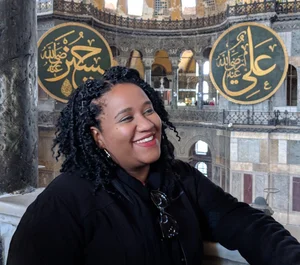
Episode 145: bell hooks
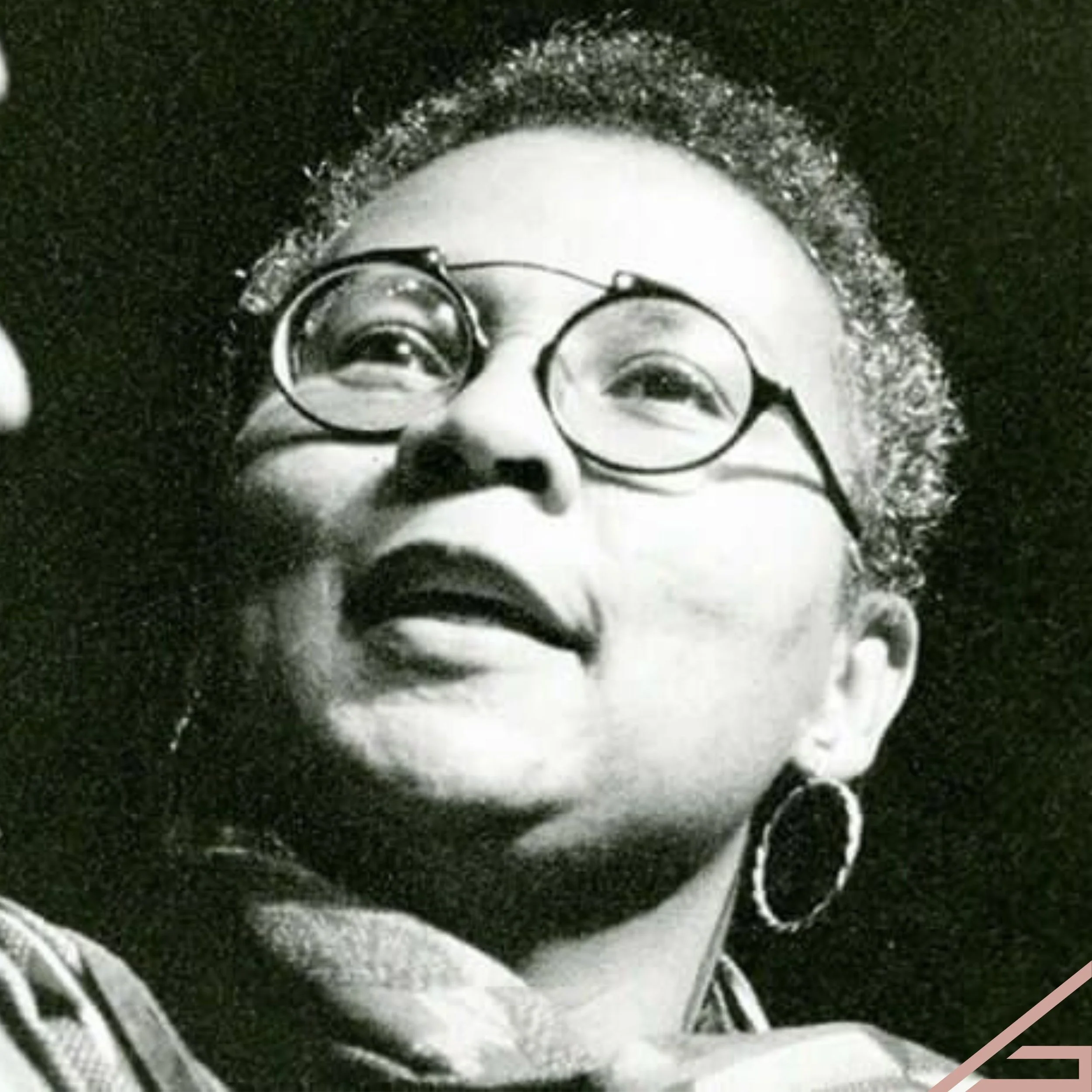
We begin in Hopkinsville, Kentucky, on September 25, 1952, where Gloria Jean Watkins was born to working-class parents. Growing up in the 1950s and 1960s South, Gloria came of age during segregation and was acutely aware of how race, class, and gender shaped everyday life—from schools and neighborhoods to social expectations. In her later writing, she reflected on how these structures defined her community and deeply influenced her thinking. From an early age, Gloria found poetry. She regularly recited works by writers such as Langston Hughes, Gwendolyn Brooks, and Elizabeth Barrett Browning for her church community. Her early writing appeared in her Sunday school magazine, where it was met with criticism; adults felt she was too bold, speaking to them as equals. Known for “talking back,” Gloria developed a strong sense of defiance that would later define her voice and scholarship.
As she committed more fully to writing, she adopted the name “bell hooks” in tribute to her great-grandmother, Bell Blair Hooks, a woman remembered for her sharp opinions. She intentionally stylized her name in all lowercase to shift attention away from her identity and toward her ideas and work. hooks earned her bachelor’s degree in English from Stanford University in 1973 and began drafting Ain’t I a Woman: Black Women and Feminism at just nineteen. She later received a master’s degree from the University of Wisconsin–Madison and a doctorate from the University of California, Santa Cruz in 1983. Over her career, hooks published more than 70 works spanning books, films, and children’s literature, while also teaching at institutions including Yale, Oberlin College, City College of New York, and abroad. In 2004, she joined Berea College as Distinguished Professor in Residence and later founded the bell hooks Institute. She also co-founded the bell hooks Center, a space dedicated to supporting underrepresented students through feminist, anti-racist, and love-centered practices. bell hooks passed away on December 15, 2021, at her home in Kentucky, at the age of 69.
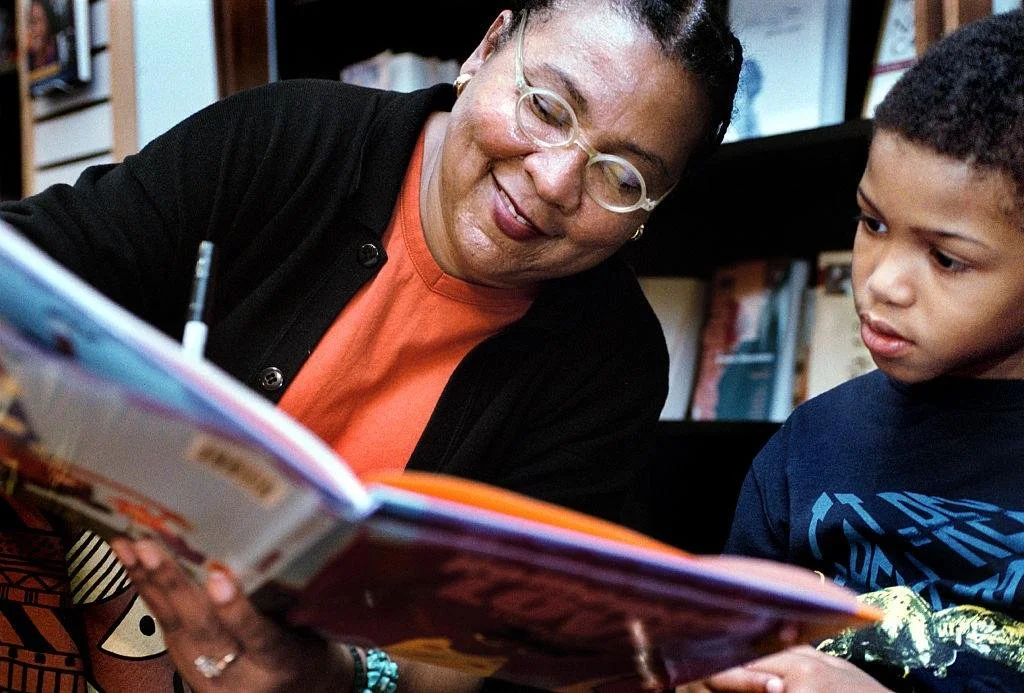
Caryatid: Dr. Dana Cuff
Dr. Dana is a nationally and internationally recognized architect, scholar, and activist whose work centers on spatial justice, urban innovation, and affordable housing. She founded UCLA’s cityLAB in 2006 to advance experimental research on equitable metropolitan futures and expanded its community-based work in 2019 with coLAB in Los Angeles. cityLAB has represented the U.S. at the Venice Architecture Biennale, been featured by major media outlets, and been recognized as a leading urban think tank. Its “housing first” research helped shape California legislation enabling secondary units on millions of single-family lots. Dana has also led UCLA’s Mellon-funded Urban Humanities Initiative and co-authored Urban Humanities: New Practices for Reimagining the City (MIT Press, 2020). Her career has been honored with major awards for activism, research, and education, for example she won Women in Architecture Activist of the year in 2019 by Architectural Record and Educator of the year in 2020 by the LA chapter of AIA.
-
This transcript was prepared during the development of the episode.
Final recorded episode may deviate slightly from the content presented below as changes, edits, or improvements may be made during the recording and editing process.
Jessica: Hi! Welcome back to another episode of She Builds Podcast, where we share stories about women in the design and construction field, one lady at a time.
Norgerie:This season's theme is “Anything Goes” a combination of regular episodes and charrettes based on anything inspiring us at the moment.
Jessica: Quick reminder, we are not experts on history; we are just sharing stories about the information that we find, as friends having a fun conversation.
Nogerie: If you find an error, send us an email and we will all continue learning.
Jessica: This week, we will be talking about bell hooks, who is most known as a black writer and feminist, but did you know that she was an architecture critic? We’ll get into it in a bit but first I’m Jessica Rogers, saying happy Lunar New Year to everyone based out of Miami, Florida.
Norgerie: And I’m Norgerie Rivas thinking how am I going to celebrate the lunar year in Houston Texas.
Jessica: We first begin in Hopkinsville, Kentucky on September 25th, 1952 - Gloria Jean Watkins was born to working class parents.
Norgerie: Welcome Gloria
Jessica: For it to be the 1950s and 1960s, and in the south, you can assume that Gloria was growing up during segregated times. In previous writing, Gloria would note that growing up she was very cognizant of how class, race, and gender were defining her town through schools, neighborhoods, and basically every day life.
Norgerie: It's hard to think about all the harsh realities children notice. There's a lot that goes unnoticed but then you'd be surprised at what they do perceive and their insights.
But Gloria found poetry, since she was very young - Gloria would recite poems from authors and poets like Langston Hughes, Gwendolyn Brooks, and Elizabeth Barrett Browning for her church community.
Norgerie: That's lovely.
Which reminds me of a time that I was a apart of a group of students that were in orator competitions. So basically we would recite poems and get judged on it. Now, I don’t remember signing up for this - I think it was a voluntold situation - which happened a lot to me as a kid. I just got placed into things and clubs.
Norgerie: How old were you?
Jessica: I was either in 7th or 8th grade - so I was like 13/14. Norgerie, were you a part of any clubs or groups at school - were you ever voluntold to join things?
Norgerie: Hahaha not that I remember. I volunteered myself, I was involved in student government since middle school, and competitive sport was cheerleading. We won a few competitions! I was also in Model UN, the French Club… I would have joined an orator club if there was one at my school. What are other things that you were voluntold to do?
Jessica: Let’s see - some of them I think I mentioned in past episodes but I was entered in an etiquette bee. I won first place - that was like in the 3rd or 4th grade. I had to memorize all of these etiquette rules. I modeled our school uniforms, also in 3rd or 4th grade. In the first grade - I was in the school choir? Not sure why - don’t know who thought I could sing but I was able to miss class.
Norgerie: Oh I was in choir too in elementary and middle school, and when I was like 12, I went to modeling school. But these were things I just wanted to do, maybe choir I was voluntold. And I ended up not really liking modeling school. So I didn't go to the graduation.
Jessica: fortunately for me, I liked all of those things or found them interesting. But I was also a shy kid so I doubt that I would have said no. I was too afraid to be defiant like our girl Gloria - she was not afraid to speak her mind, okay!
Norgerie: Oh great! What did she do?
Jessica: Gloria had her early work published in her Sunday school magazine, and she was criticized for her writing.
Norgerie: That happens Gloria, I'm glad she was brave and put herself out there. I hope she received constructive criticism so that she could build upon for her next submission.
Folks thought she was too daring speaking to adults as if they were her equals. She was known for talking back. Which helped her develop a sense of defiance about her.
Norgerie: Oh snap!
Jessica: This also reminds me - at some point, when Gloria decides to pursue more of her writing, she changes her name to “bell hooks” as a tribute to her great-grandmother - Bell Blair Hooks -a woman known to have sharp opinions herself. Also to note - bell made the conscious decision to spell her name in all lower case - so that the attention focus on her work and her ideas versus her identity.
Norgerie: hmmm that's an interesting take on that.
Jessica: I think this decision would have came about either in high school or early college. Because okay, so bell received her bachelor’s degree in English from Stanford University in 1973, and when she was 19, she began working on the draft of her first book “Ain’t I a Woman: Black Women and Feminism".
Norgerie: I like that title.
She then received her master’s degree from the University of Wisconsin-Madison and her doctorate at the University of California, Santa Cruz in 1983.
Norgerie: That school sounds familiar. Didn’t one of our previous ladies attend one of these schools?
Jessica: Yes, we had a couple of our ladies graduate from there - We had Iris Apfel from ep 93, Edith Clarke ep 89, and Ada Gompers from ep 104. Iris studied art, Ada studied architecture, and Edith studied Civil Engineering. Our girl got her Masters in English Literature.
Norgerie: Oh we can start an alumni club.
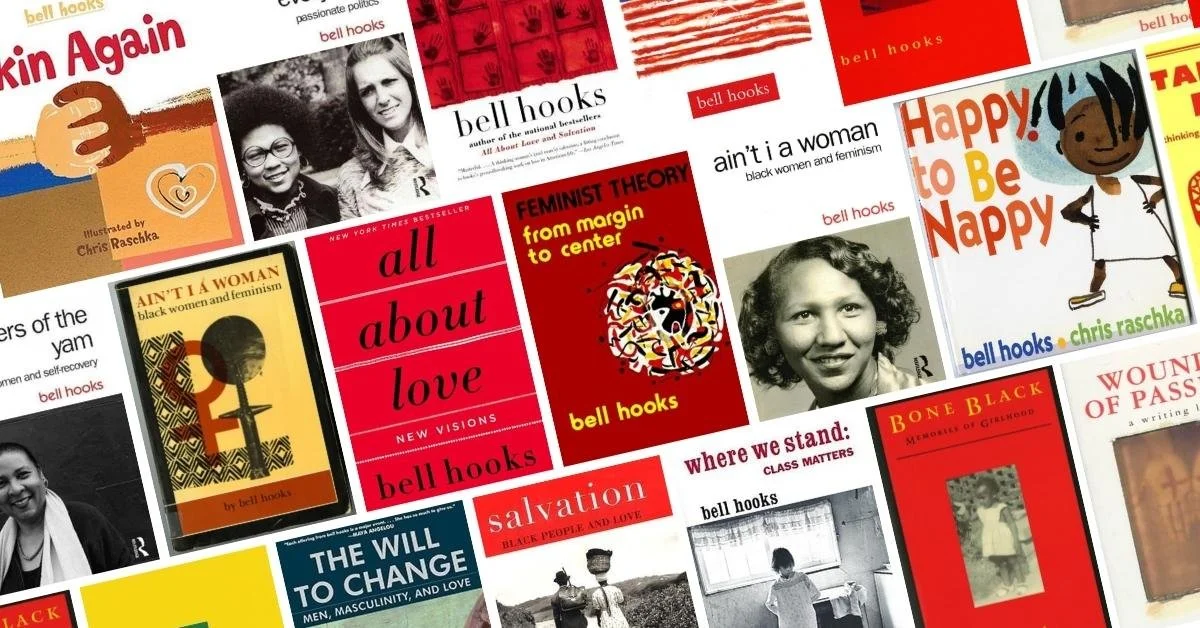
Okay, so let’s talk about bell and her FIRST book that got published. “ Ain’t I a woman: Black women and Feminism."
Norgerie: Let's!
So bell’s books in general is a critique on how culture is something that is designed and constructed.
Norgerie: Ok.
So in Ain’t I a woman, it talks about how women’s bodies are seen in historically constructed spaces like plantations, domestic interiors, and labor sites,
Norgerie: Oh.
Jessica: This kinda reminds me of some of our ladies and how they critiqued how kitchens were designed.
Norgerie: Not where my mind went but ok I'll go down this path with you, well you spoke about Alice Constance Austin that believed in creating a socialist commune that had houses with no kitchens. So that's another hot take
Jessica: then this all of our ladies talked about public housing.
Norgerie: Many moons ago we spoke about Catherine Bauer who was a houser. Which meant she believed and advocated passionately for high quality, affordable public housing for low income families. Which was novel at the time.
Jessica: I also think about episode 128 - Cloethiel Woodward - her work at the housing guild and how she talked about homes for the working class - how they didn’t need grand parlours or formal dining rooms but thought of larger kitchens and living rooms that could be more flexible and turn into additional bedrooms.
Norgerie: Yeah
Jessica: Which reminds me of another concept that bell has, the concept of “Homeplace”. Which she refers to as domestic and communal spaces - that are often maintained by women - she would argue that it’s mostly black women - but I would also argue that it was women of color too.
Norgerie: Sure.
She also talks about home as a place centered around meaning, care, and safety. Both concepts that later would influence us designers on how we think about interior architecture and community-based housing models, some of which we’ve kinda talked about in the past as well.
Nogerie: Yeah of course. That's great.
I was first introduced to bell hooks, when looking for books to read, listening to people’s recommendations for black authors. I didn’t come across bell’s work as an architecture critic until I was looking for a lady to discuss for one of our seasons - I can’t remember which one - but I know I was looking for a critic. When I came across this connection of bell as an architecture critic, it totally surprised me.
Norgerie: That’s so lovely how that happens when you're learning about someone and then you make a connection later and realize how they influenced the built environment and you had no idea, and you want to tell the world, and then when you finally find the season where her story fits, it feels so great!
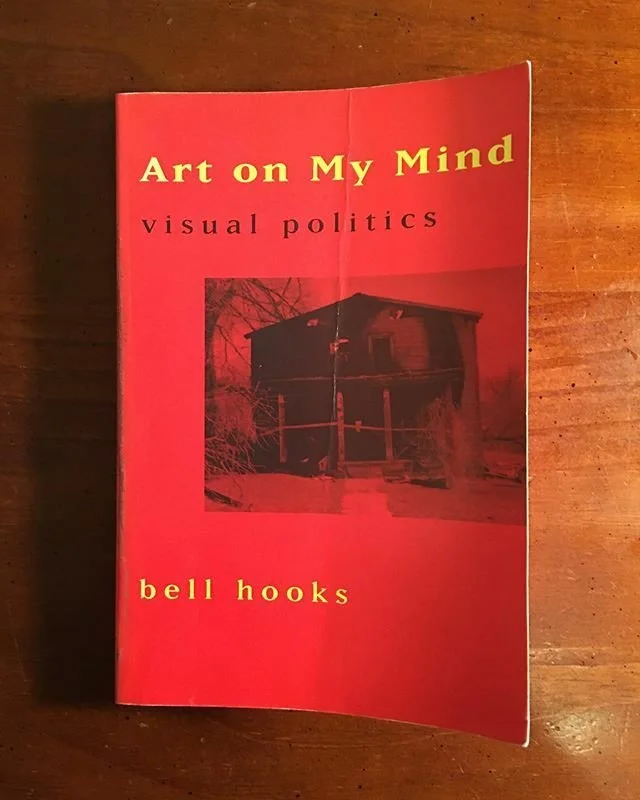
Jessica: Yeah it does! She has another book called “Art on My Mind: Visual Politics.” Which I myself hadn’t heard about. In this one, she talks about how museums, galleries, and cultural institutions are places where power is visually and spatially reproduced. Looking at how history is preserved, whose aesthetics are legitimized, and whose presence becomes more visible versus others.
Norgerie: Oh this sounds so powerful! Both these books you've mentioned today are going on my Libby list. This is really what we talk about every single episode, who tells the story, the characters in it, what we see and live in our spaces matters. It shapes how we view the world and ourselves, architecture is much more than walls and a roof. Every decision we make spatially is political whether we want it to be or not.
Yes, reading excerpts from her writing, I am realizing more and more the connection of her work. She saw how architecture can and is political, similar to some of the previous conversations that we had with Mel from the Architecture is Political podcast.
Norgerie: Exactly. HOW WERE HER BOOKS RECEIVED? WAS SHE POPULAR AT THE TIME OR WERE HATERS HATING?
Her books are really well received - that’s how I had heard about her. I would put bell in the canon of famous female black authors like Toni Morrison, Nicki Giovanni, Maya Angelou - okay, the last two are mostly known as poets, but they’re all renowned authors that also were cultural critics.
Norgerie: ahhh! Amazing!
I mean, she was so good that she had over 70 pieces of published work that ranged from books, films, and children’s books; she also taught. She was an assistant professor of African and Afro-American studies and English at Yale, an associate professor of American literature and women’s studies at Oberlin College, and then a distinguished professor of English at City College of New York. She even taught abroad.
Norgerie: Of course she did! I'm glad she got to share her insights, in so many colleges, with so many students, all over the world!
In 2004, she joined Berea College as a distinguished Professor in Residence. In 2014, she founded the bell hooks Institute at Berea College were she dedicated her papers to the college. During her time at Berea College, hooks co-founded the bell hooks Center with Professor Dr. M. Shadee Malaklou. The center was created as a supportive space for underrepresented students—especially Black and brown femme, queer, and Appalachian students—where they could explore activism, learning, and creative work. Grounded in hooks’s belief in feminism and love as transformative forces, the center hosts events and programs that center on radical feminist and anti-racist.
Norgerie: I've said it before and I'll say it again. So powerful! This would be a good Archventure, to go visit and learn more about this center.
Jessica: Well, on December 15th, 2021 - Bell would pass away due to kidney failure at her home in Kentucky at the age of 69
Norgerie: Awww always so sad when we reach the end of their life. Really, thank you Jessica for sharing this story. I've never heard about belle hooks but now I want to read her published work and become more informed on what she did and how she viewed the world.
Jessica: Alright, now we have reached the second half of our episode the Caryatid, this is where we select a woman living today who is doing her thing, furthering the profession, and whose work continues to hold the profession up just like the caryatids or columns shaped like women found on greek style buildings.
Jessica: so without further adieu …. this week’s caryatid goes to Dr. Dana Cuff
Norgerie: woooo Danaaaaaa
Jessica: Dr. Dana is a nationally and internationally recognized architect, scholar, and activist whose work centers on spatial justice, urban innovation, and affordable housing. She founded UCLA’s cityLAB in 2006 to advance experimental research on equitable metropolitan futures and expanded its community-based work in 2019 with coLAB in Los Angeles. cityLAB has represented the U.S. at the Venice Architecture Biennale, been featured by major media outlets, and recognized as a leading urban think tank. Its “housing first” research helped shape California legislation enabling secondary units on millions of single-family lots.
Norgerie: I can’t believe Dana has not been a caryatid yet! cityLAB is such an interesting group to highlight.
I know! I’m sure we mentioned cityLab in the past but yes! Dana has also led UCLA’s Mellon-funded Urban Humanities Initiative and co-authored Urban Humanities: New Practices for Reimagining the City (MIT Press, 2020). Her career has been honored with major awards for activism, research, and education - like for example she won women in architecture activist of the year in 2019 by Architectural Record and educator of the year in 2020 by the LA chapter of AIA.
Norgerie: Incredible, yet another book I need to add to my list. So many books, so little time!!! Just like belle, Dana is a thought leader. Glad her work has received the recognition it deserves.
Jessica: Before we say goodbye we want to say thank you to CMYK for the music, John W our technical advisor. And most of all thank you for listening!
Lizi: Remember to check out our show notes for links to all of our resources on this episode as well as pictures of projects we’ve talked about.
Norgerie: We hope you enjoyed learning about today’s lady and caryatid along with our banter, and that you are inspired to find out more about them and other amazing professional ladies. Again, thank you.
jessica: She Builds Podcast is a member of the Gābl Media podcast network. Gābl Media is curated thought leadership for an audience dedicated to building a better world. Listen and subscribe to all the shows at gablmedia.com. That’s G A B L media.com.
Lizi: Please let us know what you thought of our episode. If you’ve enjoyed it please help us spread the word. Tell your friends and give us 5 stars on Itunes and Spotify, and write us a review, this will all help us reach a wider audience and for more people to learn about these amazing ladies with us.
Norgerie: Your support means everything to us. If you’ve enjoyed our content and want other ways to help us with our mission, you can support us by visiting our website for merchandise.
Lizi: If you don’t need any more swag, but you’d still like to consider supporting the research we’re doing, you can donate to us on our website shebuildspodcast.com/donate or you can buy us a coffee at buymeacoffee.com/shebuildspodcast. You can also find links to all of these items on our website.
Jessica: We are excited to hear from you and for you to come back and keep learning about bosses with us. You can email us your thoughts at shebuildspodcast@gmail.com, leave a comment on our website shebuildspodcast.com, or follow us on instagram and facebook @shebuildspodcast, and on X @shebuildspod. See ya!
References
“Bell Hooks.” National Museum of African American History and Culture, nmaahc.si.edu/explore/stories/bell-hooks.
De Klerk, Khensani. “An Ethos of Interdependency.” The Architectural Review, 18 Mar. 2021, www.architectural-review.com/essays/books/an-ethos-of-interdependency#:~:text=Bell%20hooks%2C%20an%20African%20American%20woman%2C%20discusses,**Focusing%20on%20dreams**%20*%20**Ignoring%20predefined%20biases.
Gender, Race, and the Freedom of Ideas | Wisconsin Alumni Association. www.uwalumni.com/news/bell-hooks-obit.
Hooks, Bell. Art on My Mind. THE NEW PRESS, 1995, uchi-arch.weebly.com/uploads/1/3/1/6/131600248/art_on_my_mind__visual_politics_-_bell_hooks-excerpts.pdf.
Making Sure You’re Not a Bot! journal.eahn.org/article/id/11690.
Posts, View All. “Essay on Bell Hooks in the Architectural Review.” Race & Architecture, 6 Sept. 2022, raceandarchitecture.com/2022/09/06/essay-on-bell-hooks-in-the-architectural-review/#:~:text=In%20order%20to%20demonstrate%20the,praxis%20in%20communities%20of%20colour.
She Builds Podcast is a proud member of the Gābl Media network. Come join us!
Introducing the Gābl Media AEC Community Memberships. An interactive community platform for you, our audience! Ready to Start? JOIN NOW. Already a member? Login, gain instant access to the community, resources, and the most convenient way to get your continuing education credits.
Be sure to check out: https://gablemedia.com/shebuilds