Episode 151: Beverly Willis
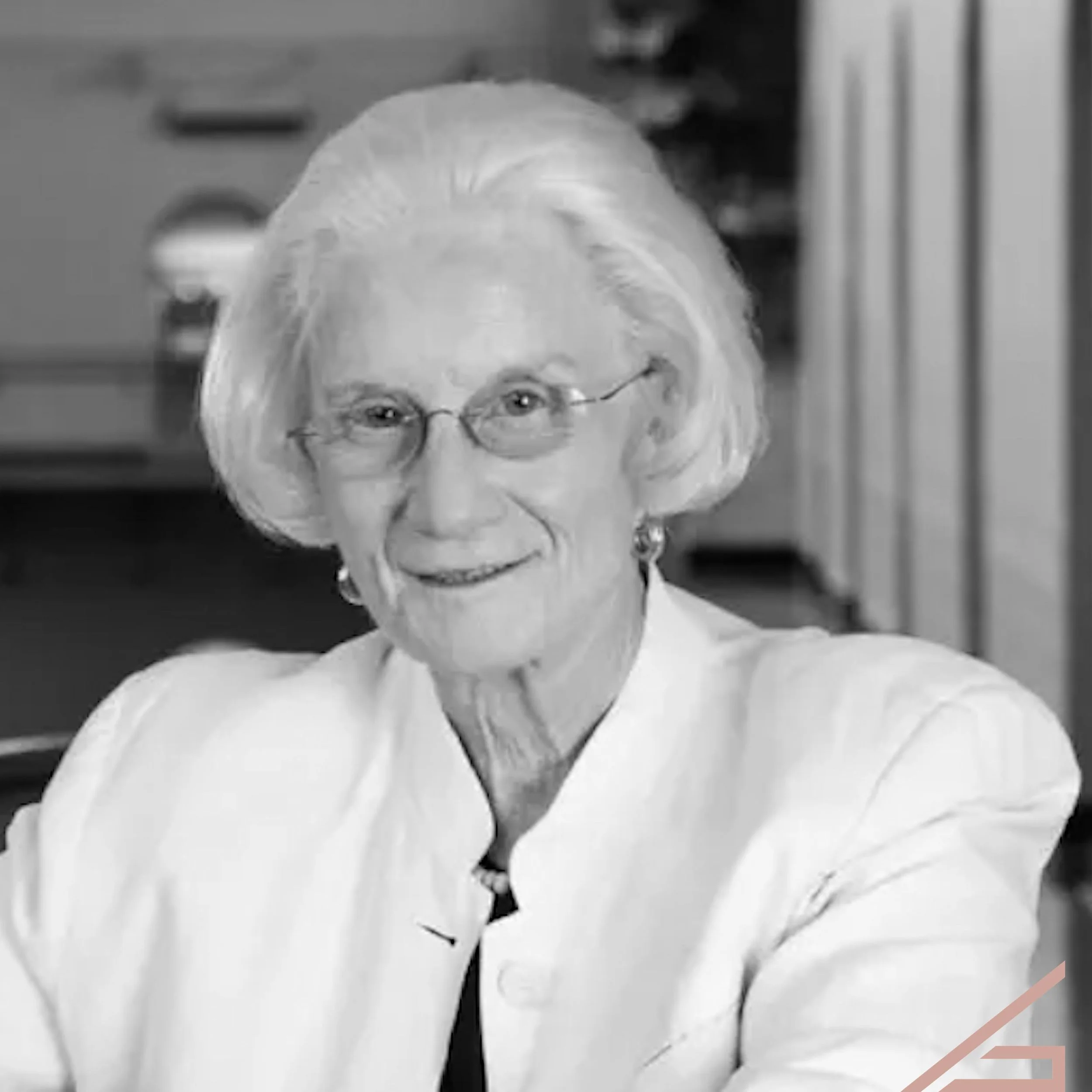
On February 17, 1928, in Tulsa, Beverly Willis was born. After earning her architecture degree from the University of Hawaii School of Architecture, Beverly established her own architecture practice in California at a time when very few women owned and operated design firms. Throughout her career, she worked on a variety of residential, commercial, and institutional projects and became known for embracing innovation and new technologies in architectural practice. While Beverly's design work was impressive in its own right, she is perhaps best remembered for her advocacy for women in the built environment. Frustrated by the lack of recognition given to women architects throughout history, she founded the Beverly Willis Architecture Foundation in 2002. The organization was created to research, document, and celebrate the contributions of women in architecture, engineering, landscape architecture, and related fields. Through the foundation, she launched the Pioneering Women of American Architecture project, a groundbreaking initiative that documents the lives and careers of women who helped shape the built environment. The online platform has become an invaluable resource for researchers, students, and design professionals, helping to ensure that the contributions of women architects are no longer overlooked. Beverly passed away in 2023, but her impact continues to be felt throughout the profession. Through both her architectural work and her commitment to preserving women's stories, she helped create a more inclusive understanding of architectural history. She inspired future generations of designers to follow in her footsteps.

Caryatid: Julia Gamolina
Julia is an architect, writer, and advocate best known for founding Madame Architect, a platform that highlights women shaping the architecture and design industry. She created it after noticing that many talented women in architecture weren’t receiving the visibility or recognition they deserved. What started as an interview series and Instagram account grew into a respected platform focused on career conversations, leadership, and representation in AEC.
-
This transcript was prepared during the development of the episode.
Final recorded episode may deviate slightly from the content presented below as changes, edits, or improvements may be made during the recording and editing process.
Jessica: Hi! Welcome to season 15 of She Builds Podcast, where we share stories about women in the design and construction field, one lady at a time.
Norgerie: This season's theme is: Collective Impact. Exploring AEC organizations and professionals shaping a more inclusive and innovative built environment. Quick disclaimer: we are not experts, we are just sharing stories about the information that we find, as friends having a fun conversation. If you find an error, send us an email and we will all continue learning.
Jessica: Today, we want to shine a spotlight on the Beverly Willis Foundation, the resource Pioneering Women of American Architecture, and the lady behind it all, Beverly Willis. I’m Jessica Rogers excited to have the band back together we’ve missed you ladies and listeners, based out of Miami, FL
Norgerie: I’m Norgerie Rivas, excited about this season focusing on how people come together to form organizations and collaborate, in Houston, Texas.
Lizi: Hi, I’m Lizi Raar, excited to be back, and coming to you from Chicago, Illinois!
Norgerie: So much to celebrate today! We’re at the start of a new season and Lizi is back!!!
Jessica: Yeay!! First, thank you to all the listeners for being here listening and learning along with us. Now, Lizi give us an update, what have you been up to since we last heard you on the show in 2025?
Lizi: Ahh! I am very excited to be back with you ladies, so I have a pretty big update. I actually moved from San Francisco to Chicago at the beginning of this year. As some of you know, I am from Michigan originally, and I was feeling like it was time to be back in the Midwest and just time for a change. It is so sad to leave San Francisco and the family and friends I have there, but I am excited about being closer to family and friends over on this side of the country now. Norgerie and Jessica were so kind in letting me take a hiatus while I job hunted, packed up my life, said goodbye, drove across the entire country, and settled into a new job and apartment here in Chicago, but now I’m excited to be back to researching and sharing about ladies!
Norgerie: Well Jessica and I are so happy you're back in the Midwest, closer to family and to the two of us. Lizi and I are now in the same time zone which is very refreshing. For the first time our podcast lives in not three but two time zones.
Jessica: I wonder if this will make our coordination any easier.
Lizi: We shall see, but I gotta believe it will, right?
Jessica: So anyway, let's get this show on the road. So our story begins on February 17, 1928, Beverly Ann Willis was born in Tulsa, Oklahoma. She grew up during the depths of the Great Depression. Her parents were Ralph William Willis he ran a company that drilled for oil. And her mother was Margaret Porter Willis, a nurse.
When she was around 6 years old, her parents divorced. Her mother couldn’t afford to support Beverly and her brother, so she was placed at an orphanage, then at St.Joseph’s Academy.
Norgerie: Oh no! What a start, this feels like the start of a movie or 10 part mini-series.
Lizi: It really does! That is not where I thought this story was going to start.
Jessica: Ya’ll know I love a back story, and I will share my sources - but ‘Bev’ recalled the last time she saw her father - it was when she was 15, in 1943, she spent the summer working for her father in Illinois. She learned how to weld drilling bits. It is said that she earned a man’s wages, and she used that salary to take flying lessons.
Lizi: hahaha I love her priorities. Lemme just take some flying lessons. Maybe go barnstorming. But I do like that she got to spend the summer with her Dad and learn such a cool skill.
Norgerie: Hold up, dad was still in the picture? Why was our girl sent to an orphanage then? What is going on?
Lizi: Well I think he went off on his own and couldn’t raise the kids alone, same as mom.
Norgerie: Can people get away with crap like this today? Or is this a 1920s-30s thing?
Lizi: I mean this is why kids end up in foster care. If the parents can’t provide appropriate care for the kids, they will go into foster care until the parents can get their bearings and support the kids again. And sometimes they go back to mom and dad. So I’m just glad that she was able to see her Dad still.
Norgerie: You're right. And I'm very sheltered and naive. Well glad Bev is flying now.
Jessica: In one of my sources, it said that she took flying lessons because she wanted to be a pilot in the War. Actually, I get ahead of myself. Okay, so during WWII, Margaret, Bev’s mama, gets a job lending a hand in the military by working on the liberty ships that were stationed or anchored in Portland, Oregon. With this job, Mama Margaret was able to reunite with Bev and her brother.
Lizi: See there you go!
Norgerie: Oh we're back with mom!
Lizi: That’s right, she figured it all out, got it together. They’re back together! We love it.
Jessica: Bev took night classes in woodworking and electrical wiring. And her flying lessons came in handy because she volunteered in the war effort - she became a Lieutenant for the Civil Air Patrol.
Lizi: I love how handy she is, and that she was so focused on flying in the army or something.
Norgerie: Civil Air Patrol is the civilian auxiliary of the United States Air Force. But it did not start out that way. During WW2 it was for civilians to provide air support to the Army through border and coastal patrols, courier services, things like that, so this is probably what Bev was doing. After the war the Civil Air Patrol became a part of the U.S. Air Force. Today the Civil Air Patrol is a nonprofit organization of "volunteers and declared to be of a benevolent nature, never again to be involved in direct combat activities.”
Lizi: So interesting. I have never heard of that, but it sounds really cool.
Jessica: Guys, we are only XX minutes in, and I’m so impressed with Bev, and there is so much to cover. Bev - would go on to study aeronautical engineering at Oregon State University, but dropped out after 2 years and worked at a printing plant. There she met artists and learned about lithography and design.
Lizi: What a pivot! And I agree. VERY impressed with her pushing to learn all these things, but also so funny that she was like nvm on engineering and decided to go for artistic pursuits.
Jessica: She eventually worked her way to San Francisco and took classes at the San Francisco Art Institute and had her first solo gallery show of watercolors.
Norgerie: Dang!
Lizi: WOAH! A solo gallery show is huge. Way to go Bev.
Jessica: So Bev makes her way to Hawaii and enrolls at the University of Hawaii and receives her Bachelor’s of Fine Arts Degree WITH Honors in 1954.
Lizi: As she moves west, she moves further into the arts.
Norgerie: Good analysis.
Jessica: So Bev is killing it as an artist, okay, in 1954 she opened her studio, Willis Atelier - her work is mostly murals, Frescos, and creative installation work.
Lizi: Solo show, her own studio, killing it.
Norgerie: Seriously!
Jessica: She gives credit to her mentor, Jean Charlot, for a lot of the work she received. He was her connector, recommended her for commissions, and introduced her to potential clients. One of her clients was the United Chinese Society and an important figure, Louise Dillingham.
Norgerie: Oh Jean was a guy! Oh like the French spelling. I digress. Glad Bev has an ally on her corner. Who was Louise Dillingham?
Lizi: So Louise was a socialite and philanthropist in Hawaii. She also did a lot of community work and was a founder of the League of Women’s Voters in Hawaii.
Norgerie: Oh that's cool!
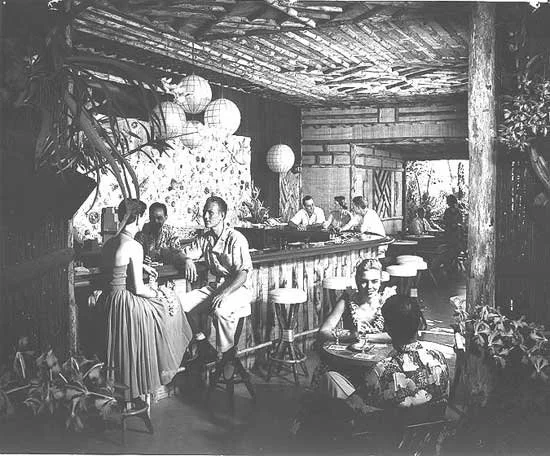
Jessica: Henry Kaiser was another prominent client she had - he was an industrialist - I feel like we might have talked about him before. He is definitely a contributor to the Hoover Dam, the Bonneville Dam, and actually a bunch of dams. He was also into real estate development like the Hilton Hawaii Village - where he hired Bev to create the Shell Bar.
https://beverlywillis.com/art/sculpture/
Lizi: ooooo that’s super cool looking. Is it on the ceiling and the wall? I love the texture of it and would love to get a tropical drink there.
Jessica: What impressed her the most about Henry Kaiser - is that his education didn’t go past the eighth grade but yet he was successful with all of these businesses and projects. His mantra was “Find a need (or a hole) and fill it.”
Norgerie: Yeah we're there's a will there's a way! And lots of people are self starters who don't need a degree. Still impressive to have all the drive, determination and good luck to have a lot of successful business ventures.
Lizi: hahaha. I can see why he would inspire her. Especially since, even though she did go to school and get a degree, she did it on her own path and forged her own way with whatever interested her at that time.
Norgerie: Yeah she was doing it too. She probably saw a kindred spirit.
Jessica: I feel like the Shell Bar was Bev’s introduction to the architecture side of things. Which led her to connect with a five-star admiral to design office spaces … which led her to design officers’ clubs all over the island. Bev was mostly designing interior spaces, retail, and some industrial pieces
Lizi: She has such an interesting military/art crossover throughout her life.
Norgerie: Agreed, she's also giving me episode 41, Dora Gad vibes. I wonder if they were contemporaries. Maybe, I'll look that up later.
Jessica: So in 1958, Bev wants to expand her architecture business - so she moves to San Francisco!
Norgerie: She's back!
Lizi: WOO!!! She’s a bay area girlie now.
Jessica: In 1960, she received her first project to design a residential building, the Robertson Residence - but the catch was… that the client used a wheelchair. So Bev had to design an ADA-compliant home before that was even a thing!
Norgerie: Woah! Get your Universal Design on Beverly!
Lizi: So ahead of her time. I wonder if she ended up doing similar things that would be put into practice later.
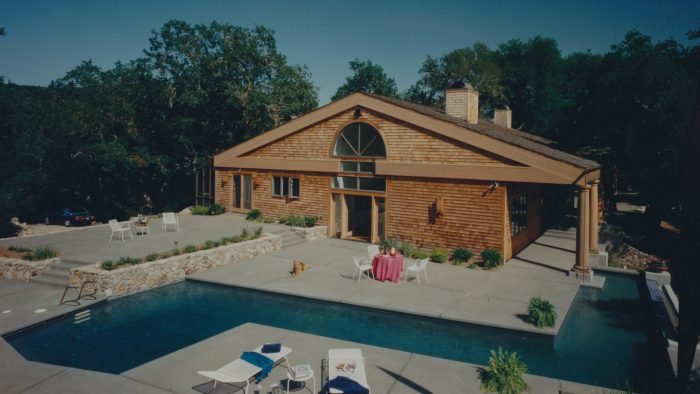
Jessica: yeah she did! Wider hallways and thresholds, lower door knobs, and counters. Along with that home, she also designed her own home along the Napa River; it had a farm and a ten-acre vineyard.
Lizi: That sounds real nice. When can we come and stay?
Norgerie: Yeah, archventure here we come!
Jessica: so from 1963 to 1965 - Bev would convert 3 victorian style/era buildings into a unified shopping center, which is now known as the Union Street Shops. Lizi, have you heard of this place?
Lizi: Nope. I know where Union Street is, so can imagine where we’re talking about the main drag in the Cow Hollow neighborhood, most likely, but I haven’t heard of this as a specific project.
Jessica: A pioneer in every right - this project basically becomes the introduction to adaptive reuse.
Norgerie: This is amazing! See she is such a revolutionary. AND without a formal degree just like that guy she was impressed by. It is YOU who is impressive, Beverly!!!
Lizi: That’s right!!
Jessica: So, another project that she was known for was the Nob Hill Court Condominiums - it was then called the Vine Terrace Apartments. It was a complex that had 45 residences.
Norgerie: Adding multi-family to her portfolio.
Lizi: Now this one I recognize. Not by name I’ll admit, but when I look it up, I have definitely passed it by before!
Norgerie: archventureeee
Jessica: Okay, y'all, I’m not sure if you guys had this thought … but through all of this, I was wondering HOW IS SHE GETTING ANYTHING BUILT WITHOUT A LICENSE??”
Norgerie: Oh, actually no I didn't think about that. I've no idea how regulated the profession back then. Do you?
Jessica: Well I don't know how regulated but NCARB existed already. But to know that she eventually becomes a fellow. And it’s not like she was working on small projects - these are large projects where there is no workaround and we are talking about the 60’s there had to be some regulations about licensure in place.
Norgerie: Yeah, fair point.
Jessica: Well, the AIA California barred Bev from taking the ARE exams because I guess she didn’t meet what we call now AXP - she had only worked with OTHER Architects and not with FOR or under other architects, if that makes sense?
Norgerie: Get out, if anything it should prove She's more qualified cause A. Other Architects trust her to collaborate with her. And B. Her buildings are not falling, what more do they want?
Lizi: hahaha. I like the my buildings aren’t falling down as proof of my abilities. I mean I guess by their standards that doesn’t count, but it does seem ridiculous based on her portfolio.
Jessica: With what we know of this lady before we did an episode on - YOU KNOW this didn’t get her down. Bev got the help of the Hawaii Senator Daniel Inouye and California’s Governor Pat Brown. Bev received her license in 1966.
Lizi: WHAT?!?
Norgerie: OMG! Politicians are getting involved? Lady's got an influential network. Which we already know but still!
Lizi: So true, but that’s hilarious that she was like, you won’t let me sit for the exam? Hold my beer.
Norgerie: She had the last laugh if she didn't even need to take the exam! If I could so it all over again, this is the route to take.
Lizi: HAHA start making friends with politicians people.
Norgerie: hahaha, yes that's the moral of today's story. We can end the episode now.
Lizi: But I just assumed that her politician sway made it so they let her take the exam?
Norgerie: That could be, but a girl can dream.
Lizi: Yes. That would be a better story if that’s how it went down though.
Jessica: So Bev has her license, and she is running a 35-person firm. Her work is being recognized all over the country, she is winning awards and projects.
Norgerie: of course she is! We expect nothing less at this point.
Lizi: Agreed. She’s booked and busy.
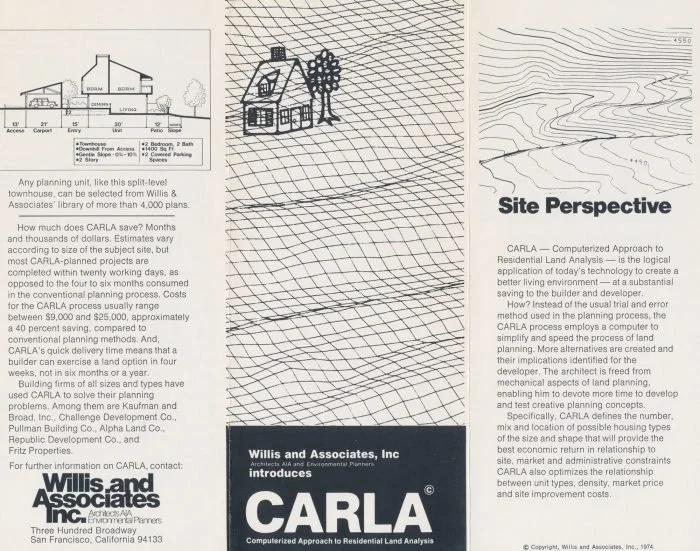
Jessica: And she is winning large projects too! She is designing condos and large scale housing. She was ahead of the curve by being one of the early champions of computer-aided design. She even created her own software! Yall!
Lizi: WHAT!? What’s it called?
Jessica: It was called CARLA, which stood for Computerized Approach to Residential Land Analysis. It analyzed residential land to help plan developments more efficiently. It made projects cost-effective - while growing in scale. And this wasn’t just in theory; she put CARLA to work when she designed a town for Military families in Honolulu that housed 11,000 people.
Lizi: WOW.
Norgerie: Just when I think this lady cannot get more impressive, she goes and does this.
Jessica: I can go on and on about her architectural efforts - like she designed the San Francisco Ballet, the first Ballet Building in the US.
Norgerie: Historic!!! Did you go there Lizi?
Lizi: No. Way. That is so cool! I have been to the Opera House across the street. I have been out front of this building, but never attended the ballet there. It’s a cool building though.
Norgerie: we should go!! This is an archventure fo’ sho. Also I've never been to a ballet so this would be pretty amazing.
Jessica: That does sound like a trip we need to plan. But let’s go with our theme of Collective Impact. At one point, Bev becomes the president of AIA California. One source mentioned that she was the first female president.
Lizi: Trailblazer.
Norgerie: Again, making history.
Jessica: She is also worked with agencies like the National Academy of Science in Washington DC to coordinate national projects connecting how different government buildings and agencies are connected with each other and where they overlap.
Along with our lady Chloethiel Woodward, Ep XX, Wolf von Eckhardt, Cynthia Fields, and Herbert Franklin, they co-founded the National Building Museum. Which surprised me!
Norgerie: Incredible!
Lizi: Yeah no kidding. I feel like she’s REALLLY scaling up as her career goes on, both in projects and in notoriety.
After the September 11 attacks, she helped form a coalition that focused on the rebuilding of Lower Manhattan.
Norgerie: I can see how she was truly engaged and focused on making meaningful impacts throughout communities.
Jessica: in 2002, together with Heidi Gifford, Diane Favro, and Lian Mann- they formed the Beverly Willis Architecture Foundation. After sharing concerns that there weren’t women represented in Architectural history books .. hmmm sounds familiar
Norgerie: Preach Beverly!! It's really thanks to women like them and all their amazing efforts that we can do what we do today.
Lizi: Truly. We have talked before about how we utilize the resources that they have compiled in order to write our episodes about all these amazing ladies.
Jessica: The BWAF is a nonprofit with the mission of advancing the knowledge and recognition of women’s contributions to architecture.
Bev says, “I founded the Beverly Willis Architecture Foundation (BWAF) to fight to ensure that women in architecture have the same opportunities as men to realize their dreams and to be remembered. The creation of BWAF meshed with my broader lobbying efforts for change, including the 1978 resolution, passed by the American Institute of Architects, to support the Equal Rights Amendment. Forty years later, the profession has yet to live up to the promise of equality. Whether women will finally be able to achieve democratic equality with men depends on our collective will to forge a new professional culture of inclusion. Working together, with financial support of all committed to this mission and with our innovative programs, research, and leadership, we create a more equitable future for women in the building industry.”
Lizi: So well said. And sad to think that 40 years later we still haven’t achieved that, but I am so glad that women like Beverly have worked to bridge that gap and to inspire women like us to take the torch from her. She’s right that until this is a collective goal the changes will be harder to make happen.
Jessica: Bev, like us was a fan and an advocate for the Society of Architectural Historians and through her foundation, she created a travel fellowship that provided funding to a scholar to attend the annual SAH conference, but it had to be an individual who had a paper that “best advanced the status of women in Architecture.”
Norgerie: Oh thats awesome! We need a Scholarship for a podcast advancing the status of women in AEC!
Lizi: That would be great.
Jessica: In 2012, together with her wife Wanda Bubriski, they created the Pioneering Women of American Architecture. With their then-president Joan Blumenfield and their executive director at the time, Cynthia Karcauer. They have this incredible website and resource that we use all of the time.
Lizi: At first, the goal was simple: find and highlight about fifty women architects from the early twentieth century. But once they got into it, they realized this wasn’t going to be a quick project. These stories weren’t sitting neatly in one place—they were scattered, overlooked, and in some cases almost completely lost.
Norgerie: Supported by the National Endowment for the Arts and through the Beverly Willis Architecture Foundation, they brought together scholars from across the country to decide who should be included. Fun fact, the 50 women they chose were all born before 1940.
Lizi: Sounds familiar! They really have created a really great website and resource about these women. We love the Pioneering Women of American Architecture site.
Norgerie: We also love the women we've connected with thanks to the website like Kelly Hayes McAlonie, author of the Louise Bethune book, Every Woman Her Own Architect which I seriously need to finish this year!
Jessica: We also can’t forget their podcast - New Angle Voice. Sometimes I think of it as our show if we had funding, resources, and time.
Lizi: HAHA. so true. They do deeper dives into these ladies than we can, which is so cool.
Norgerie: They are seriously legit. Every time I listen to their show I feel like I'm listening to a great documentary.
Jessica: Bev was behind all of this ya’ll. If any of you attended the 2018 AIA conference in New York, where folks had the Women’s Equality Flash Mob in protest of the Me Too movement, our girl Bev was there.
Lizi: Yeah she was!
Jessica: Beverly at the age of 95, on October 1st, 2023, would pass away at her home in Branford, Connecticut.
Lizi: GAH! That is so recent. She did SO much.
Norgerie: I'm speechless. The level of reach and impact Beverly had and continues to have is truly inspiring.
Jessica: Originally, I wanted to tell Bev’s story in our season of living legends - but while we were developing that season, she had passed away. Her legacy is beyond anything that I don’t think any of us could imagine. Between her foundation and the archive - we owe alot to Ms. Bev.
Lizi: We really do. She was so impressive in how she made things happen for herself and didn’t let anything get in her way to achieve them. Plus I love that she pushed so hard for women in the profession, to support them, to shine a light on their achievements, and to make sure they would continue to make a path in the profession.
Norgerie: My thoughts exactly.
Jessica: We are not the only ones that sing her praises either - I’ll be sure to include in our show notes the many tributes to her. Including one published from Arch Newspaper. Some of our Caryatids talk about Bev, what they knew of her, and their interactions with her. I’m talking about the likes of Jeanne Gang from Studio Gang, Deborah Burke, Dean of Yale School of Architecture. Our very own professor and caryatid, Lori Brown, was a mentee of Bev. In this article, Lori says this about Bev: “She was an outspoken and much-needed advocate for women in architecture. During our many check-ins, Bev would encourage me to see other avenues to pursue to move forward and ways to work around what appeared as roadblocks. She was and remains an immense inspiration for me and what I hope to contribute through my life.“
Lizi: Aww. I love hearing other women talk about our ladies so fondly. Especially coming from one of our past professors. Beverly truly sounds like someone you wanted to have in your court, and honestly all of us did have her in our court in a way, because she was that for all women in the profession.
Norgerie: Beverly is truly the mentor we all need in our lives. And have, thanks to everything she's done, how she's paved the way and left behind a wealth of resources that continue to push us forward.
Jessica: Alright, now we have reached the second half of our episode the Caryatid, this is where we select a woman living today who is doing her thing, furthering the profession, and whose work continues to hold the profession up just like the caryatids or columns shaped like women found on greek style buildings.
Jessica: Julia Gamolina
Whoo
Jessica: Julia is an architect, writer, and advocate best known for founding Madame Architect, a platform that highlights women shaping the architecture and design industry. She created it after noticing that many talented women in architecture weren’t receiving the visibility or recognition they deserved. What started as an interview series and Instagram account grew into a respected platform focused on career conversations, leadership, and representation in AEC.
Norgerie: Yes!!! Madame Architect is the bees knees and super legit, it has so many components to it too, I feel like every few months I get an email about a new thing: Interviews, A Day in the Life, Next Gen, and like a ton more, my favorite is In Ink.
We’ve mentioned it on the show before Madam Architect, honestly, I’m surprised we haven’t chosen her as a caryatid yet. But shout out to friend to the show Kate Reggev who is a contributor with her column “in ink”.
Jessica: Before we say goodbye we want to say thank you to CMYK for the music, John W our technical advisor. And most of all thank you for listening!
Lizi: Remember to check out our show notes for links to all of our resources on this episode as well as pictures of projects we’ve talked about.
Norgerie: We hope you enjoyed learning about today’s lady and caryatid along with our banter, and that you are inspired to find out more about them and other amazing professional ladies. Again, thank you.
jessica: She Builds Podcast is a member of the Gābl Media podcast network. Gābl Media is curated thought leadership for an audience dedicated to building a better world. Listen and subscribe to all the shows at gablmedia.com. That’s G A B L media.com.
Lizi: Please let us know what you thought of our episode. If you’ve enjoyed it please help us spread the word. Tell your friends and give us 5 stars on Itunes and Spotify, and write us a review, this will all help us reach a wider audience and for more people to learn about these amazing ladies with us.
Norgerie: Your support means everything to us. If you’ve enjoyed our content and want other ways to help us with our mission, you can support us by visiting our website for merchandise.
Lizi: If you don’t need any more swag, but you’d still like to consider supporting the research we’re doing, you can donate to us on our website shebuildspodcast.com/donate or you can buy us a coffee at buymeacoffee.com/shebuildspodcast. You can also find links to all of these items on our website.
Jessica: We are excited to hear from you and for you to come back and keep learning about bosses with us. You can email us your thoughts at shebuildspodcast@gmail.com, leave a comment on our website shebuildspodcast.com, or follow us on instagram and facebook @shebuildspodcast, and on X @shebuildspod. See ya!
References
Florian, Maria-Cristina. “Architect and Women’s Advocate Beverly Willis Passes Away at 95.” ArchDaily, 23 July 2024, www.archdaily.com/1007703/architect-and-womens-advocate-beverly-willis-passes-away-at-95.
McCann, Hannah. “Beverly Willis.” Architect Magazine, 30 Sept. 2011, https://www.architectmagazine.com/design/beverly-willis_o. Accessed 4 Apr. 2026.
Multi-media and Sculpture. beverlywillis.com/art/sculpture.
Pioneering Women of American Architecture. pioneeringwomen.bwaf.org/beverly-ann-willis.
She Builds Podcast is a proud member of the Gābl Media network. Come join us!
Introducing the Gābl Media AEC Community Memberships. An interactive community platform for you, our audience! Ready to Start? JOIN NOW. Already a member? Login, gain instant access to the community, resources, and the most convenient way to get your continuing education credits.
Be sure to check out: https://gablemedia.com/shebuilds