Episode 148: Women’s History Month
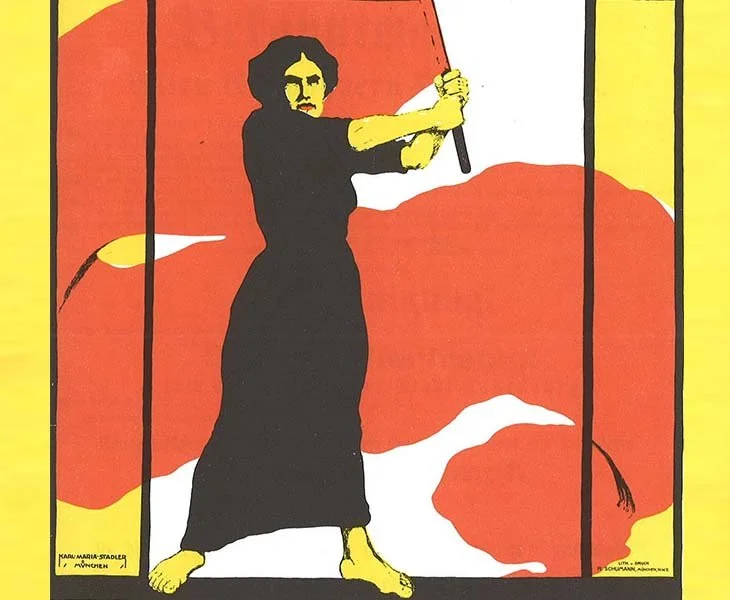
International Women’s Day, observed each year on March 8, is widely recognized as a global celebration of women’s achievements and a call for gender equality. However, the origins of the day are rooted in early twentieth-century labor movements and political organizing. The earliest precursor can be traced to National Woman’s Day, first organized in New York City in 1909 by the Socialist Party of America. The event was closely tied to activism among garment workers advocating for safer working conditions, fair wages, and women’s suffrage.
The idea soon spread internationally. In 1910, activists proposed an annual international day dedicated to women’s rights, and the first large-scale observances were held across several European countries in 1911. March 8 later became the established date following a 1917 strike led by women textile workers in Petrograd, Russia, whose protest for “bread and peace” helped spark the Russian Revolution.
The themes surrounding International Women’s Day: labor justice, political representation, and social reform, intersect with the stories of several women previously featured on She Builds Podcast. Labor leader and U.S. Secretary of Labor Frances Perkins transformed workplace safety and labor policy following the Triangle Shirtwaist Factory fire. Architect and social reformer Alice Constance Austin proposed cooperative housing designs intended to reduce domestic labor for women. Meanwhile, design professionals such as Miami architect Agnes Ballard navigated professional barriers while women across the world continued advocating for political and economic equality.
Today, International Women’s Day is observed globally through civic events, demonstrations, and educational programming. In the United States, recognition often aligns with Women’s History Month, which expands the conversation by highlighting women’s contributions throughout the entire month of March.

-
This transcript was prepared during the development of the episode.
Final recorded episode may deviate slightly from the content presented below as changes, edits, or improvements may be made during the recording and editing process.
Jessica: Hi! Welcome to season 14 of She Builds Podcast, where we share stories about women in the design and construction field, one lady at a time.
Norgerie: This season's theme is “Anything Goes” a combination of regular episodes and charrettes based on anything inspiring us at the moment.
Jessica: Quick reminder, we are not experts on history; we are just sharing stories about the information that we find, as friends having a fun conversation.
Norgerie: If you find an error, send us an email and we will all continue learning.
Jessica: I’m Jessica Rogers, based out of Miami, Florida
Norgerie: Hi, I’m Norgerie Rivas, meal planning and organizing in Houston Texas
Jessica: Norgerie? What month is this?
Norgerie: It’s March, which means we get to celebrate Women’s International Day
Jessica: IT IS! March is also Women’s History Month. So similar to the episode we did a few weeks ago, where we talked about the World’s fair - Now, for this week, we will get into the history of Women’s Day
Norgerie: Oh! Interesting, I know very little about this. Excited to learn more.
Jessica: So we begin in New York City … the year is 1908. Industrial factories are buzzing with immigrant women entering the workforce - primarily in garment factories
Norgerie: Does this remind you of the Triangle Shirtwaist Factory?
Jessica: Yeah, it did, similar to the discussion of the world’s fairs - I was wondering where our ladies were during this time, and Frances Perkins episode came to mind - in particular, the Triangle Waist Factory.
Norgerie: ah yes episode on 28 - describe the tragedy of the triangle shirtwaist factory (https://www.shebuildspodcast.com/episodes/francesperkins )
We discussed The Triangle Shirtwaist Factory fire that happened in Manhattan, New York on March 25, 1911. It was really really bad, 146 workers died from the fire or smoke. Out of those 146, 123, the overwhelming majority, were women and girls. Children were working under these unsafe conditions! There were a lot of problems but one of the worst ones was that there weren't enough safe exits from the building so when the fire started, they were trapped. It's sadly memorable because it is one of the worst industrial tragedies in U.S. History and it led to the US adopting building codes.
Jessica: So, leading up to that tragedy, the conditions that were set were in the early 1900’s, similar to the triangle waist factory - women were working in not the best conditions. In 1908, women garment workers in New York were organizing, protesting, and striking for better working conditions, wages, and voting rights.
Norgerie: Right
Jessica: On February 28th, 1909, the socialist party of America organized the First National Women’s Day in New York City, and it centered on the topics that I was referencing. The low wages, the long working hours, women’s right to vote, and the unsafe working conditions.
Norgerie: Ok so two years before the tragedy.
Jessica: Yeah, so the last Sunday in February was basically meant to dedicate a specific day to women’s political demands, activism, and industrial labor organizing. And that was the plan for two years
Norgerie: Oh, I wonder why the date changed, but ok, I'm sure you'll get there.
Jessica: So in 1910 - we are going international honey - at an International Socialist Women’s Conference in Copenhagen, activist Clara Zetkin proposes something bold: What if women across countries organized on the same day?
Norgerie: Clara was a German Marxist theorist, communist activist, and advocate for women's rights. She was considered far left. I wonder if the right wing and capitalist would have cared so early on and strongly about women's rights if we would have it today. I don't wonder, I know. But anyway let's not digress.
Jessica: So this idea gets passed! Unanimously, might I add. So the following year in 1911 - OVER A MILLION people rallied across Austria, Germany, Denmark, and Switzerland. So it has now become Women’s International Day.
Norgerie: We've arrived!
Jessica: What’s important to note about the significance of this is not only its global recognition, but like a political rally cry - women were demanding the right to vote, the right to hold public office, and basically equal opportunity.
Norgerie: You know basic human rights to represent ourselves, what a concept. But ok I'm still curious how did it go from February to March?
Jessica: sure sure - maybe this will explain it better- In 1917, in Petrograd, Russia, women textile workers went on strike demanding “bread and peace.” It was during World War I. Food shortages were severe. Conditions were unstable.
Norgerie: I can imagine.
Jessica: Their strike sparked mass protests. Those protests helped ignite the Russian Revolution.
Norgerie: Oh really! That I've never heard about. Women's igniting change left and right.
Jessica:The strike happened on February 23 — but Russia was still using the Julian calendar. On the Gregorian calendar — the one most of the world uses — that date was March 8.
Norgerie: Oh!
Jessica: After that, March 8 became permanently tied to International Women’s Day.
Norgerie: Let's cover the difference in calendars so people can understand why the discrepancy, if they don't already know. The Julian calendar had been in use since 46 years before the common era. Then about five centuries later, enter Pope Gregory XIII introducing a new way to calculate days to better align with the solar year. So you can imagine it wasn't a quick easy change. It took time for the whole world to adopt it. Thus Russia at the time was still doing their know thing chicken wing. And as of the 20th century the Gregorian calendar was ahead of the Julian calendar by about 13 days, thus February 23 on one calendar being March 8 on the other.
Jessica: Okay so since we are talking about socialism and we are talking about countries and their socialist views, specifically countries in the Soviet and Eastern Bloc. Let’s bring it back to the states and their perceptions of these political attitudes happening abroad.
Norgerie: Well like I was saying before I can only imagine the US being like socialist ideas, no thank you. Though in the Alice Constance Austin episode we talked about how back then socialism was not the bad word it later became, people were more open to it. They even had a big movement to start a huge socialist city. What episode was that?
Jessica: Episode 138
Norgerie: Listeners check that one out if you want to hear more about that. And hear how much I believe in capitalism, which as it turns out, is actually, a lot. But yeah now through the lense of 1911, I think the idea of adopting something the Soviets were doing maybe would be OK cause they are literally our allies through the World Wars, but fast forward to 1947 and forget it. The Cold War starts, Soviets and all their ideas are public enemy #1.
Jessica: Yes! From 1911 to about the 1960s-ish the US would celebrate Women’s day but they would distance themselves from calling it International Women’s Day solely on its connection with what they called “cold war politics”.
Norgerie: I can see that
Jessica: In the states - the fight for women’s rights was still active. Going back to our ladies, in 1920, the US finally allowed women to vote and run for public office, which reminds me of episode 125, Agnes Ballard.
Norgerie: the lady from Florida that became the superintendent of schools right?
Jessica: Exactly! And to go back to the first lady we were talking about, Frances Perkins - Frances would become the US Secretary of Labor between 1933-1945.
Norgerie: Wonderful.
Jessica: It’s interesting to learn the origins of Women’s Day influenced and impacted our ladies, and to what they did as a result of it
Norgerie: It is.
Jessica: SO alright like I mentioned - the US is doing it’s own and abroad they do them - but still I think similar reasoning regarding women’s day - it’s more of demand or a desire for equal rights for women.
Which leads me to this like second wave of women activism, in the 1970’s
Norgerie: The 1970s women’s movement AKA Second-Wave Feminism was marked by intense, widespread activism focused on achieving legal, economic, and social equality. Period! Notable from this era in the US we have the 1970 Women’s Strike for Equality and the push for the Equal Rights Amendment (ERA). If you believe in Equal Rights and feel like getting royally pissed off watch a show called Mrs. America on FX. Have you seen that show?
Jessica: nooo - I think we might have talked about this show when we talk about Frances and maybe the houser? But i do remember you being pissed - is this with Phylis shaffely
Norgerie: I thought it was really good, infuriating, but well done. It's about the ERA and why we don't have it today. It's important to know all that history since we weren't alive to see it, but gives context to where we are today. On the show you get to see a lot of the second wave feminist doing their thing, like Gloria Steinem and Betty Friedan advocating for workplace; educational, and reproductive rights.
Jessica: ooohh wait - is this the one we’re Shirley Chisholm is also running for president? Maybe I did see it and didn’t finish it
Jessica: well okay so zooming back out globally in 1975, the United Nations officially began observing International Women’s Day.
Norgerie: Oh Hey!
Jessica: Two years after that, in 1977, the UN General Assembly invited member states to proclaim a United Nations Day for Women’s Rights and International Peace. This endorsement transformed International Women’s Day from a politically affiliated observance like in 1911 into a globally recognized civic event.
Norgerie: Amazing.
Jessica: By bringing the United Nations, it broadened participation beyond socialist political networks and helped establish the annual practice of thematic campaigns highlighting global gender equality issues like economic equity, education, political participation, and violence prevention. Which is what we see today.
Norgerie: Yeah it can be seen as something less political and more universal.
Jessica: Norgerie, you got Global Entry? I have mine - Because I feel like we go to the states, go abroad - then we come back, then we leave, and then we come back to the states.
Norgerie: Um, yes?
Jessica: So, back in the states after this UN Assembly, in 1978, Sonoma County, in California, organized a Women’s History Week timed to coincide with March 8.
Norgerie: Great!
Jessica: And in 1980, President Jimmy Carter issued a proclamation recognizing National Women’s History Week. By 1987, Congress designated March as Women’s History Month.
Norgerie: Woo-hoo! We go from a day, to a week, to a month!
Jessica: This was in line with American institutionalizing a month-long educational and commemorative approach. In March, we have Women’s History month - the president before Jimmy Carter, President Gerald Ford, recognized February as Black History month.
Norgerie: So it was a trend. A good trend. Thank you Gerald and Jimmy.
Jessica: Throughout the years - I think the messaging has been pretty consistent on what International Women's Day or Women’s History Month was all about. Women's Equality - in the workplace, in public office, within our bodies, and our general place in the world.
Norgerie: Preach
Jessica: We celebrate how far we've come, highlight the pioneers that paved the way, and encourage the next generation
Norgerie: This is so true and so great! I'm so glad you took this on today because I thought the International Women's Day was tied to the Triangle Shirtwaist tragedy, like we were commemorating that day. So it felt kind of weird to me to say Happy Women's Day thinking we were celebrating a tragedy. And now I know that tragedy was just one of many instances that lead to change, and I'm glad to now know the actual day is tied to a big strike which sparked a whole revolution around the world. This is great! Happy Belated Women’s Day and Happy Women's History Month. Jessica what do you think about the idea that having a women's day is patronizing to women?
Jessica: ughh eye role - after learning the history of this month and day - i feel like we need a resurgence of this event's roots - like a 5th wave of feminism - like let’s talk about Maternity Leave in the US, birth control, reproductive rights, or making egg freezing more accessible for women!
Norgerie: Let’s, or maybe we roll this in the present 4th wave?
Jessica: On the flip side, I think it’s even more annoying when people hear about women’s history month and they say “why don’t we have a men’s history month?” Norgerie what are your thoughts on that and the month - do you think it’s patronizing to women?
Norgerie: Well, my friend said it to me in the context of, ugh we're women, half the population, we don't need a day. But yeah I disagree. Like anything else that we have a day or month about, first of all it exists for a reason; because the inequalities we face are very real. And the day, the month is an effort to make space for keeping it present, voicing our concerns, and taking action. And it's also really important to celebrate how far we've come. Though lately a lot feels like we're going backwards, when you study the history like we did today, you really learn, as bad as some still is, my goodness do I have it way better than my grandma, thanks to everything her generation did and all everyone before her and after her did. And what can I do? So yeah, let's make sure we have to the very least a month dedicated to studying, remembering, and honoring women’s history. Because if we don't have a specific intention to do it then we fall into the old patterns of sweeping it under the rug and perpetuating the incorrect thought that it doesn't exist.
Jessica: So earlier this week, globally we celebrated International Women’s day on the 8th. But all month long, we celebrate women’s history, and if you are a shebuilder … we celebrate every day and twice on Tuesday!
Norgerie: Hahaha we sure do! All day Tuesday!
References
International Women’s Day. “History of International Women’s Day.” International Women’s Day, www.internationalwomensday.com/Activity/15586/The-history-of-IWD.
Pruitt, Sarah. “The Surprising History of International Women’s Day | HISTORY.” HISTORY, 28 May 2025, www.history.com/articles/the-surprising-history-of-international-womens-day.
United Nations. “International Women’s Day - RESOURCES | United Nations.” United Nations, www.un.org/en/observances/womens-day/resources.
“Women’s History Month.” National Women’s History Museum, www.womenshistory.org/womens-history/womens-history-month.
She Builds Podcast is a proud member of the Gābl Media network. Come join us!
Introducing the Gābl Media AEC Community Memberships. An interactive community platform for you, our audience! Ready to Start? JOIN NOW. Already a member? Login, gain instant access to the community, resources, and the most convenient way to get your continuing education credits.
Be sure to check out: https://gablemedia.com/shebuilds